MobileCrunch |  |

- SoftBank 007SH KT: Hello Kitty-Branded Clamshell Android Phone
- HP To Apple: You Win.
- Okay HP, Let’s Make Some Lemonade
- Mobiado’s Grand Touch Phones: Android For The Stupidly Rich
- It’s Official: HP Kills Off webOS Phones And The TouchPad
- Android Phone Owners Use Their Devices For An Hour A Day
- My Old Friend, AT&T, Still Bringing The Scumbaggery After All These Years
- My Virtual Boyfriend Is Awkward, Funny, And STD-Free
- Bing’s “We’re In” Windows Phone App is Foursquare’s Other Half
- Appia-Powered App Stores Now Seeing 1 Million Downloads Per Day
- Apple, China Mobile In Talks To Bring The iPhone To Its 600m Users
- Nokia’s Anna Update For Symbian^3 Devices Is Ready To Roll
- Citi and Best Buy Launch Mobile Rewards App
| SoftBank 007SH KT: Hello Kitty-Branded Clamshell Android Phone Posted: 19 Aug 2011 03:50 AM PDT  The Yahoo Phone isn’t the only unusual handset Japanese mobile carrier SoftBank rolled out yesterday. SoftBank subscribers can soon lay their hands on another one, the 007SH KT [JP], which has two selling points: it’s designed like a clamshell feature phone (even though it runs on Android), and it has Hello Kitty written all over it. Technically speaking, the 007SH KT is based on a model SoftBank has introduced back in May for the Japanese market. Produced by Sharp, the so-called AQUOS PHONE THE HYBRID 007SH is being marketed as the world’s first flip phone running on Android (2.3). The Hello Kitty version shares many of the (very impressive specs) of that model: waterproof body, 3.4-inch LCD touchscreen with 854×480 resolution, 0.7-inch OLED sub-display, 16MP CCD camera with 1,280×720 HD video recording, IEEE 802.11b/g/n Wi-Fi, Bluetooth 3.0+EDR, digital TV tuner, e-wallet function, etc. etc. For fans of the cartoon cat, SoftBank throws in menus and screens in Hello Kitty design, special icons for use in mails, a Hello Kitty calculator app, a Hello Kitty alarm clock, etc. SoftBank plans to start shipping the 007SH KT in Japan next month.
|
| Posted: 18 Aug 2011 05:50 PM PDT  As I write this, I’m sitting in a cafe. Around me, there are five people on laptops — four of them are MacBooks. Four other people are using tablets — all four are iPads. Welcome to the Post-PC world. That phrase was one of the first things that jumped to my mind today when I heard the news that HP was not only killing off their TouchPad and Pre webOS-based products, but also trying to spin-off their PC business. The largest PC business in the world, mind you. And HP’s statements during their earnings call today only further reaffirmed the idea of the Post-PC world. “Consumers are changing the use of their PC,” HP CEO Leo Apotheker said. “The tablet effect is real and sales of the TouchPad are not meeting our expectations. The velocity of change in the personal device marketplace continues to increase as the competitive landscape is growing increasingly more complex especially around the personal computing arena,” he continued. He then repeated, “the tablet effect is real”. But wait, then why is he exiting the tablet space after only a matter of weeks? Because when Apotheker says “the tablet effect”, he really means “the iPad effect”. Put another way, “Apple, you win.” And not just in the tablet space. Again, the largest PC-maker in the world is exiting the space. Think about how crazy that is for a second. It sounds like a completely irrational panic move. But maybe it’s not. After all, while HP may be the worldwide leader in PC sales with massive revenues, their actual profit from those sales has already been far surpassed by Apple. Further, while overall PC growth continues to contract, Apple’s Mac sales continue to grow and have outpaced the rest of the PC industry for 21 consecutive quarters. That’s over five consecutive years. That’s certainly another way to interpret ”Post-PC world”. The writing is on the wall. HP is perhaps reading it a bit early, but they may well be reading it clearly. Let’s look back at what Steve Jobs said last March when unveiling the iPad 2:
What’s perhaps most noteworthy about HP’s move today is that they, more so than any other company attacking the tablet space, seemed to have a grasp of what Jobs was talking about — undoubtedly thanks to Jon Rubinstein, the longtime Apple general leading webOS. The Post-PC device is about the combination of hardware and software all built and integrated by one company. Google doesn’t get that. RIM can’t execute. But with the Palm/webOS purchase, it seemed that HP had both the vision and resources to possibly compete with Apple. In fact, a year ago, that’s exactly what we had heard the plan was. The subsequent talk about webOS integration across their entire product line as well as the unveiling of the TouchPad and a new Pre seemed to reaffirm this. But something funny happened on the way to the battle with Apple. Amid scandal, then-HP CEO Mark Hurd was forced to resign. This happened just three months after HP acquired Palm for $1.2 billion. At the time of the deal, HP told us very clearly: “our intent is to double down on webOS“. Again, while they wouldn’t explicitly admit it at the time, the plan was to compete with Apple. But with Hurd out, HP turned to Apotheker, the man who previously ran SAP. He had been with the enterprise company for 20 years. This whole “HP as Apple” plan must have sounded like Latin to him. Since the wheels of this plan were already in motion when he came on board, Apotheker stuck to it. But while he watched for any sign of shakiness, he scooped up some data companies like Vertica. It was probably clear to those inside HP what was going on. Last month, Rubinstein switched roles, to be an executive at HP instead of the guy in charge of webOS. When the TouchPad launched, and subsequently floundered out of the gate, Apotheker had what he needed. He landed Autonomy and it was set. HP wasn’t going to be the next Apple. They were going to be the next IBM. Not IBM, the PC juggernaut, mind you — IBM the company that cut loose the PC hardware division and focused on data and enterprise. That’s what so jarring about today’s news: HP just did a full stop and then a 180 before our very eyes. Apple and IBM both resurrected themselves in recent years, but each did it in opposite ways. The Apple plan didn’t work for HP, Apotheker decided. He now clearly believes the IBM plan will. During today’s earnings call, Apotheker also cited the threat their “business critical services” were facing from Oracle. That’s interesting since Hurd landed at Oracle as a co-President. The two companies hate one another. In choosing the IBM resurrection model over the Apple one, Apotheker has also better aligned his company for a full-on battle with Oracle. So where does all of this leave webOS? The TouchPad is dead. The Pre sleeps with the fishes. HP seems to be open to all options including licensing out webOS for others to use. But the simplest solution will probably end up being the one they go with: a sale of webOS to some other entity that can actually use it. HP VP Richard Kerris made this option pretty clear in a tweet today. HTC? Samsung? Facebook? Google?! One thing to consider: Jon Rubinstein sits on Amazon’s board… Something else to consider: when HP bought Palm for $1.2 billion last year, the world was a different place. These days, companies are paying $4.5 billion for a group of patents. Google is paying $12.5 billion for Motorola, a large portion is which is also for patents. Along with Palm and webOS, HP got Palm’s 1,500+ patents last year, as they emphasized to us at the time of the sale. If those patents are as important in the mobile space as some believe, they alone could be worth more than the $1.2 billion Palm sale price now. If HP can flip those for north of that price, the whole acquisition won’t look like nearly as much of a disaster as it does right now. But the big picture item of today remains what HP is no longer doing: making Post-PC devices or even PCs themselves. In less than the span of a year, the biggest PC maker in the world realized not only that they couldn’t be Apple, but that they couldn’t even compete with Apple. And they admitted it. And called the fight. It was a first-round T.K.O. The question is: does this make HP look foolish, cowardly, or smart? The answer today may be different from the one tomorrow. Started by Steve Jobs, Steve Wozniak, and Ronald Wayne, Apple has expanded from computers to consumer electronics over the last 30 years, officially changing their name from Apple Computer,... Hewlett-Packard Company (NYSE: HPQ), commonly referred to as HP, is an American multinational information technology corporation headquartered in Palo Alto, California, USA. HP is one of the world’s largest...
|
| Okay HP, Let’s Make Some Lemonade Posted: 18 Aug 2011 04:34 PM PDT  This morning, HP admitted failure. After spending $1.2 billion to acquire Palm, they announced that they were killing off the development of all smartphones and tablets running Palm’s webOS platform — including the just launched TouchPad. Having survived for just 49 days before its death, it’s tragic that TouchPad lived just one day longer than the oft-mocked Microsoft Kin. webOS itself, as a platform, isn’t entirely dead. HP says they’ll “continue to explore options to optimize the value of webOS”, which is really just a fancy way of saying “Yeah, we’re still not entirely sure what the hell we’re going to do with this thing.” There’s a way out here, HP — and it’s all thanks to Google’s acquisition of Motorola. You see, Google’s surprise $12.5 billion buy-out of Motorola has undoubtedly left Android’s other, non-Motorola partners (Samsung, HTC, LG, etc.) a bit… shaken up. In the blink of an eye, Google went from having what was essentially 0% of the hardware marketshare for their own operating system up to a domineering 30%. Out of nowhere, Google went from being the nice guy who builds all the software for free to something resembling a direct competitor. Google insists that Motorola will operate as a separate entity — but at the very least, they’ll be able to sneakily leverage Motorola to influence Android’s hardware ecosystem as a whole. But where else are Android’s other partners to turn? Windows Phone 7? Great! Lets keep throwing licensing money at Microsoft. They only completely screwed up by sticking with Windows Mobile 6.5 for far too long, launched Windows Phone 7 way too late in the game whilst simultaneously way too early in its own development, inexplicably tried (and failed) to launch the Kin platform at the same time, and have been dickishly throwing a wrench in the Mobile world’s gears by demanding patent licensing money from anyone who finds any success with Android. Here’s your move, HP: Fill the gap that Google has just left open.
Will it earn HP back the $1.2 billion they spent on Palm? Nope! But they still have Palm’s patent armory to show for that. Will it score webOS the throne as the #1 or #2 platform in the mobile world? Nope! iOS and Android have that locked down for the next few years , and there’s very little that could change that — but it does make it a viable contender against WP7 for that coveted bronze medal. It also makes the platform a whole lot more viable to third-party developers, if only because it would boost the number of purchased webOS devices above.. like, twelve. HP ends up with a better webOS, and they avoid looking like they’ve completely wrecked the platform. Partners get a platform — and one with quite a lot of potential — in exchange for allotting manpower they’d already have to allot if they were to explore it in the first place, and they get to help steer its future to boot. Developers get a third platform worth developing for. (Oh, and, in some sense, it makes a licensed webOS more defensible against patent attacks, because of all the major players that had an official hand in its development.) It’s not a resounding victory, but it’s probably HP’s best move at this point. Motorola Solutions, Inc. (NYSE: MSI) is a data communications and telecommunications equipment provider that succeeded Motorola Inc. following the spin-off of the mobile phones division into Motorola Mobility Holdings,... Hewlett-Packard Company (NYSE: HPQ), commonly referred to as HP, is an American multinational information technology corporation headquartered in Palo Alto, California, USA. HP is one of the world’s largest...
|
| Mobiado’s Grand Touch Phones: Android For The Stupidly Rich Posted: 18 Aug 2011 02:07 PM PDT  The Canadian luxury buffs over at Mobiado have been churning out obscenely expensive (not to mention obscenely designed) phones since 2004, and if you were to look at their line-up, one thing would become immediately clear: none of them are worth the price. Dumbphones swathed in gold and pearl inlays are still dumbphones, after all. That said, Mobiado is trying something new with their Grand Touch series: bedazzled smartphones! The Grand Touch and the Grand Touch GCB are Gingerbread-powered handsets with 4-inch Super-AMOLED displays. Not too shabby, compared to everything else in their inventory. Both devices have sapphire crystal buttons and sapphire crystal backplates, but while the Grand Touch’s body is made of “precision CNC machined from solid aircraft aluminum,” the Grand Touch GCB is plated in 24k gold. What Mobiado declines to tell their discerning customers, though, is that you can buy the exact same device for (I would imagine) considerably less, without all the gilded trappings. That’s because what Mobiado seems to have done is buy a up a boatload of Samsung Nexus Ss and gave them a makeover. The slightly-curved screen is a bit of a giveaway, but things like port placement and the amount of fixed internal storage (16GB) seal the deal. Still, they’ve got quite the racket going. These sorts of devices were always meant for people who have more money than taste, and who’s to say the uber-rich won’t fall in love? Mobiado has declined to list a price for the Grand Touch series, but there’s a useful rule of thumb when it comes to this sort of thing: if you have to ask how much it is, you probably can’t afford it.
|
| It’s Official: HP Kills Off webOS Phones And The TouchPad Posted: 18 Aug 2011 12:17 PM PDT  Brace yourselves, webOS fans. In the hours leading up to their Q3 conference call later today, HP has just confirmed that they will be discontinuing operations surrounding the TouchPad and all webOS phones. To quote their press release: HP reported that it plans to announce that it will discontinue operations for webOS devices, specifically the TouchPad and webOS phones. HP will continue to explore options to optimize the value of webOS software going forward. This news will come as a rather huge punch to the gut for webOS die-hards (myself included, though you can’t say that we couldn’t see it coming), many of whom have stood by the product for years — first in hopes that Palm would eventually launch a device worthy of the rather fantastic operating system, and later in hopes that HP’s acquisition of Palm would be the spark to the fire that just never seemed to light. On the upside, webOS itself isn’t dead — at least, not just yet. HP’s wording up above leaves things a bit vague, with at least two potential routes left open: licensing webOS to others, and sticking webOS in other, non-phone/tablet devices (HP has already mentioned plans to put it in printers and cars.) Until further notice, however, it’s essentially dead in the water. Pour one out for webOS devices tonight, my fellow geeks. Update: If HP needs a way out while still saving face, here’s the way to do it. Update: HP’s Stephen DeWitt says “We are not walking away from webOS.” They will continue efforts to advance and perhaps license the OS, but its life as we have known it is certainly over.
|
| Android Phone Owners Use Their Devices For An Hour A Day Posted: 18 Aug 2011 12:16 PM PDT  Nielsen has found that Android users tend to spend over an hour a day on their phones. Sixty-seven percent of their time is spent “working” with apps while the rest is spent on the mobile web. Forty-three percent of those apps are top 10 Market apps while the top 50 apps are used 61 percent of the time. The rest of the apps – all 250,000 of them – are used the rest of the time. The stats come in advance of Neilsen’s free webinar, to be held on September 15. Nielsen will also release the browsing/app habits of iPhone users, a potentially interesting metric to assess the uptake of mobile web apps vs. the native variety.
|
| My Old Friend, AT&T, Still Bringing The Scumbaggery After All These Years Posted: 18 Aug 2011 12:04 PM PDT  January 19, 2011. It’s a day I’ll always remember. It’s the day I finally got to destroy a Horcrux that had been bringing misery into my life: AT&T. That’s the day I finally cancelled my AT&T service after years of dropped calls, non-existant service, gross over-charges, and all around frustration. I even did it before I knew for sure that Verizon was getting the iPhone. I had had enough. That I got to cancel it by way of Google Voice, adding insult to injury, was just icing on the cake. Looking back, it was one of the best decisions, technology-wise, I’ve made in the past few years. And today it’s looking even better. You see, after months of AT&T being out of sight, out of mind, they stormed back into my brain last night when I read on Engadget that they would be removing individual text messaging plans in a few days. In AT&T marketing parlance, this is called “streamlining”. In my parlance, this is called “bullshit”. Specifically, AT&T is removing the cheaper $10 a month option which gives users 1,000 text messages. All that remains is the $20 a month unlimited option. Or you can have no pre-set plan and pay $0.20 for each SMS and $0.30 for each MMS. Sure, that’s “streamlining” in that they’re making three options now two. But what’s important is the motives behind the move. Here’s what’s really going on. Naturally, AT&T will never admit to this, but they’re scared shitless of the full-on assault currently underway in the SMS space. You see, these short messages have long amounted to a revenue stream of billions of dollars for carriers, with profit margins approaching 100 percent for each message. In other words, it has long been a total rip-off. And the carriers have been milking it dry for years. But now startups like GroupMe, which allows users to bypass SMS and use data to send short messages, are gaining popularity. Meanwhile, massive players like Google and Facebook have introduced their own solutions for bypassing SMS. And with the launch of iOS 5 this fall, Apple is about to bake a work-around into each and every iPhone out there in the form of iMessage. AT&T’s “streamlining” is a purely defensive maneuver. The truth is that neither GroupMe or Facebook Messenger are going kill SMS overnight. Nor is iMessage. But what these services are going to do is slowly but surely make people realize they don’t need to send nearly as many text messages anymore. I look at my own usage. In the past six months, I’ve sent seven actual SMS message. Seven. All the rest of my short messages have been through either Beluga, GroupMe, the Google Voice app, or now Facebook Messenger. Each of these messages have been sent or received for free (they’re a just use a tiny amount of data you’re already paying for if your on 3G). This is the future. So with the services now out there making people less reliant on SMS, what was going to happen? People were going to want to downgrade their plans. Who wants to pay $20 a month when you’re using only a handful of messages? Why not pay $10? Well, now you can’t. You can either pay $20 for unlimited, or have no plan and pay AT&T’s ridiculous per-message rate. AT&T knows that most people are not going to chose the latter. Again, we’re not to the point yet where people will be fully comfortable letting go of SMS. Hell, all of the services I mentioned use it as a backup in one way or another. Think of it this way: unlimited SMS is heroin. The $10 a month limited plan is methadone which you could have used to wean yourself off. AT&T has just cut off the methadone supply. They’re daring you to go cold turkey. Most won’t be able to. I’m sure it’s purely coincidental that this move is happening right now, just weeks before the launch of iOS 5 with iMessage. Sure, AT&T just “streamlined” their SMS plans a few months ago, but why not do it again? I’m also sure it has nothing to do with the fact that Apple unveiled iMessage without telling the carriers. AT&T just felt like customers needed this change right now. Nope, I don’t miss you one bit, AT&T. Update: Not even 2 minutes after I publish, does my old foil Seth Bloom write in to note that this change is only for new customers. In other words, this will only affect millions of new users who sign up for AT&T to get the iPhone 5 (or any new Android phone, etc) shortly. No biggie. In other words part 2: “go ahead, don’t sign up for an SMS plan, we dare you”.
|
| My Virtual Boyfriend Is Awkward, Funny, And STD-Free Posted: 18 Aug 2011 11:43 AM PDT  Dating sucks. Nine out of ten times, your suitor is a jerk. The other ten percent of the time, they pretend not to be a jerk only to show their true jerk-like colors a few weeks later. This is the world we live in, and there’s really nothing we can do about it. Oh wait… That’s right. There’s an app for that. Straight ladies and gay gentlemen: Wet Productions proudly introduces the My Virtual Boyfriend app. Yep, you can now find love through a simple App Store download, which is equally weird and hilarious. There won’t be any fun sexy time like there would be with a physical boyfriend, but at least you know you’ll be 100 percent STD-free. The app is described as a “game” by the developer, where you work to get the virtual boyfriend to fall in love with you by relating to his personality. There are over 100 guys to choose from, all of which are based on various male stereotypes like the alpha male, the geek, the urban male (not sure what that implies?), the metrosexual, and the nice guy. From there you can customize his hair, clothing, face and even change his name. Then the game begins. Your virtual boyfriend starts things up by saying something awesomely cheesy like “There must be a light switch on my forehead because every time I see you, I’m turned on,” or “They say the pen is mightier than the sword, but obviously they haven’t seen my sword.” Saucy. You are then given a number of different reactions to give him, ranging from smiley-face-thumbs-up to angry-face-thumbs-down to confused and disgusted faces. You also have the option to choose dates and activities, or perform actions like giving him a compliment or holding hands. If you select the interact option, you’ll be able to perform certain gestures through touch like poking him in the belly, caressing his cheek, or my personal favorite, a nice slap across the face. The device’s built-in accelerometer detects when you are holding it at an awkward angle, and makes your new BF stumble all over the place like there’s an earthquake in his little virtual world. But don’t think that just because your boyfriend’s virtual that he’s not an ass. Depending on what criteria you give at the beginning of the game, your virtual boyfriend could be a total tool (check out the screen grab to the right). Luckily, you can swap him out for a better one with a few taps. If only you could do that in the real world. The app is available for $.99 on the Apple App Store and works with the iPad, iPod, and iPhone. There is also a free Lite version of My Virtual Boyfriend if you’d like to get a feel for the boy toys before paying up. Check out the video after the break.
|
| Bing’s “We’re In” Windows Phone App is Foursquare’s Other Half Posted: 18 Aug 2011 11:07 AM PDT  On the rare occasions that I’m not sitting in a chat room and writing about phones, I usually play the role of “hang-out coordinator” among my friends. You probably have too: messaging people to see who’s available, finding out who wants to eat what, getting ETAs from prospective partiers, the works. It’s a bit draining to say the least, but if you’re usually stuck with that responsibility and you have a Windows Phone, then Bing’s newly-launched “We’re In” app may be just right for you. The process is simple: when you use the app to create an event and invite people to it, the invitation goes out via text message. Once your friends respond (either from the Windows Phone app or the mobile website), their locations will be plotted on a map, which is great for keeping tabs on that one friend who’s always late. All the participants can leave status updates on the fly, so the first person who makes it to the restaurant can let the others know that he’s snagged a table in the back. It’s just as easy to duck out of event you’ve committed to, although protocol suggests you should leave a parting status update so as not to gain a reputation as a flake. In a way, it almost seems like We’re In is Foursquare’s other half: while Foursquare lets you know when someone makes it somewhere, We’re In deals with all the back-end logistics of getting there in the first place. Instead of having to message individual people back and forth and try to determine who knows about what, We’re In puts all of that information in one location. The Bing team has announced their intention to bring We’re In to other devices, but sorry international partiers: it’s U.S. only for now. Foursquare is a geographical location based social network that incorporates gaming elements. Users share their location with friends by “checking in” via a smartphone app or by text message.... Company: MICROSOFT Website: http://www.microsoft.com Launch Date: 4/4/1974 IPO: 13/3/1986, NASDAQ:MSFT Microsoft, founded in 1975 by Bill Gates and Paul Allen, is a veteran software company, best known for its Microsoft Windows operating system and the Microsoft Office suite of...
|
| Appia-Powered App Stores Now Seeing 1 Million Downloads Per Day Posted: 18 Aug 2011 09:10 AM PDT  Appia, a startup that powers a white-label content and commerce platform for everyone and anyone who needs a mobile app store, has passed an important milestone—the company is now seeing 1 million downloads per day (that’s up from 500,000 a few months ago) across all of its app stores. For background, the company powers mobile app storefronts for more than 40 partners, including four of the world’s top five handset manufacturers (Samsung, T-Mobile, AT&T, and Verizon Wireless). The bonus of using Appia's white-label offering is that it enables its partners to deliver apps to more than 3,200 different mobile device makes and models. And company powers an App Stores for Opera Software and Telcel, Mexico's largest operator. In July alone, Appia’s marketplaces reached over 40 million downloads. And in the 38 months since launching, the Appia marketplace has delivered 200 million cumulative downloads, with over 100 million downloads generated in the last four months alone. In fact, Appia’s download rate is an impressive 2,282% from July 2010. Appia's recently launched pay-per-download marketplace also helped deliver 2.5 million sponsored app downloads in 3 months for 30 partners including Amazon, Priceline and Cupid.com. The Appia Marketplace boasts 140,000 applications from more than 32,000 developers across every major operating system, including Android, iOS, BlackBerry, Java, Windows and Symbian, with thousands of Android apps being added every month. During July, Appia saw downloads from over 200 countries and 3,500 different handsets. Of course, for basis of comparison Apple’s App Store is seeing 1 billion app downloads per month, and has racked up an impressive 15 billion total downloads. But as you can see from the chart included in this post, Appia’s app downloads are growing at an impressive rate compared to other mobile app stores. And thanks to an exploding app download market, perhaps this growth will continue. Appia is the world’s largest open app marketplace and white label storefront platform, supporting all operating systems and handsets. Ranked #15 on the Wall Street Journal's 2011 list of...
|
| Apple, China Mobile In Talks To Bring The iPhone To Its 600m Users Posted: 18 Aug 2011 08:38 AM PDT  The world’s largest mobile carrier, China Mobile, does not currently support or sell the iPhone. That might be changing, though. Reuters is reporting that the carrier has held meetings with Steve Jobs himself in regards to launching the iPhone on China Mobile, the world’s largest wireless carrier. There’s clearly a demand. Apparently China Mobile, despite not selling the phone itself, already has 7.44 million iPhones registered on its network. This of course is done through unsanctioned means, but shows China Mobile users will go out of their way to get the iPhone on the network. One of the roadblocks is that China Mobile operates on a different 3G standard developed in part by the Chinese Government. This TD-SCDMA network isn’t compatible with the two 3G radio variations currently in the iPhone. Those China Mobile subs using a jailbroken iPhone on the network only have access to the slower, legacy 2G EDGE network proving the iPhone’s popularity. China Unicom is currently the only carrier in China to officially support the iPhone, but China Mobile offers a huge opportunity for Apple. Both carriers are state-owned and operated, but where China Unicom operates on traditional wireless standards, only 180 million users are on their network. China Mobile, however, reaches 97% of the Chinese population and has over 600 million subscribers. (Verizon and ATT combined have just 230 million subs in the US) From the fake Apple Stores to the millions of 2G iPhones, the Chinese people clearly want the latest Apple has to offer — and Apple will not likely turn down the cash. Started by Steve Jobs, Steve Wozniak, and Ronald Wayne, Apple has expanded from computers to consumer electronics over the last 30 years, officially changing their name from Apple Computer,...
|
| Nokia’s Anna Update For Symbian^3 Devices Is Ready To Roll Posted: 18 Aug 2011 07:46 AM PDT  Despite the fact that the company has a newly adopted OS in the works with Windows Phone 7, Nokia has always promised to continue supporting Symbian, its first OS. That said, owners of the Nokia N8, C7, C6-01 and E7 will get to download the Symbian Anna software update starting today. The update includes improvements to the browser and maps, along with new icons. The update will also bring with it a portrait QWERTY keyboard, and split-screen viewing during text input so you can check out web pages, forms and threads as you type. As far as the map improvements go, Ovi Maps will now have a better search function as well as public transportation routes. The update also includes check-ins for social networks, along with email and SMS sharing of your location. Nokia included new business features in the Anna update as well, bringing meeting request support to email, hardware-accelerated encryption of data, and secure intranet access for users who need IPSEC and SSL VPN enablers. The best part of the update is unfortunately only for owners of the C7, but it’s a pretty sweet improvement. Once C7 owners download the Symbian Anna update, the NFC hardware in the handset will be activated. Nokia recommends going through the Ovi Suite on PC to get the download, as it’s pretty large and could fail through OTA unless your Wi-Fi connection is super reliable. Oh, and one little bummer before I go: the update is not available in the U.S. right now, and since Nokia wants to halt its Symbian business in North America, it may never be. Currently, Belgium, China, Czech Republic, Denmark, Egypt, Finland, Germany, India, Indonesia, Kuwait, Norway, Poland, Russia, Sweden, Thailand, UAE, and the UK will be the first to get the update, with other countries to follow within the next three weeks. Nokia is a Finnish multinational communications corporation. It is primarily engaged in the manufacturing of mobile devices and in converging Internet and communications industries. They make a wide range...
|
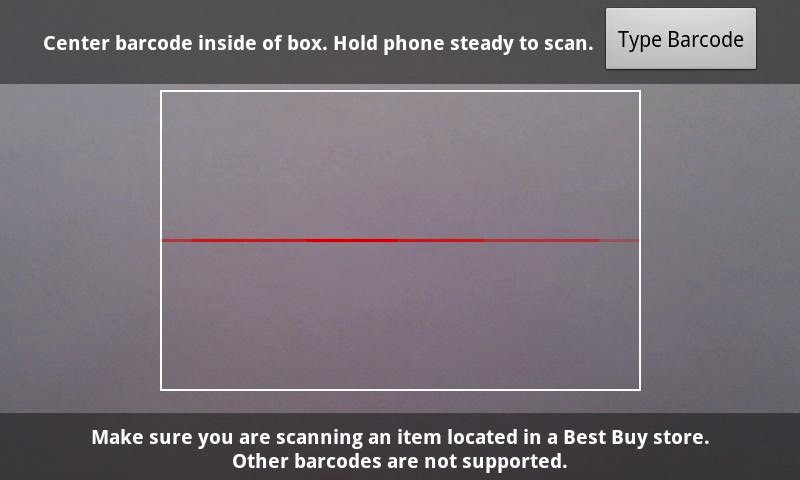
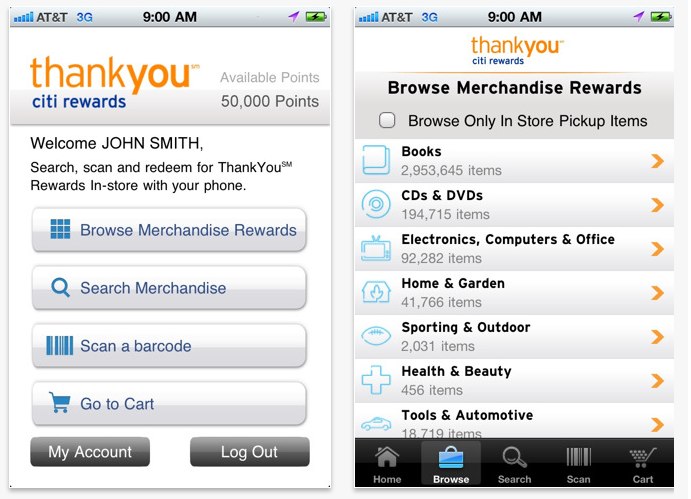
| Citi and Best Buy Launch Mobile Rewards App Posted: 18 Aug 2011 07:02 AM PDT  Citi and Best Buy have teamed up to launch a mobile rewards application for iPhone and Android devices. The “Citi ThankYou Rewards” app ties together Best Buy’s inventory systems with Citi’s “ThankYou” Rewards program, a service which allows Citi customers to earn points by using their Citi credit card or performing other banking-related activities. Now, Citi customers can use the new mobile app to track their rewards points in real time, keep an eye on items they want to buy, and then pay for those items using their earned points. The free application was built through a collaboration between the two companies, one a major financial institution and the other a leading retailer. As a customer shops in a Best Buy retail store, they can scan the barcodes of the merchandise they want to purchase. The app will display how many points are needed for each item. And when the customer is ready to checkout, those items are placed in a virtual cart within the app to complete the process. A confirmation email is sent to the customer’s registered Citi ThankYou Rewards email account, directing them to the in-store pickup counter at Best Buy to get their merchandise. The application also allows users to shop the Best Buy ThankYou Rewards catalog and schedule items for in-store pickup at the location of their choice or have them sent to their home address. In addition, the mobile app lets Citi ThankYou Rewards members shop for other merchandise in the Rewards catalog not sold through Best Buy. Those items would be shipped directly to your home. Says Ralph Andretta, EVP of Loyalty and New Products at Citi, there are millions of redemptions available via the ThankYou Rewards program outside of Best Buy, but Citi was excited to partner with the retailer which it sees as an innovative company like itself. This app demonstrates what Citi wants to be, Andretta says: “the best digital bank in the world.” More details regarding this announcement are available at this morning’s webcast, going on now at www.liveatbestbuy.com/livestream. Best Buy Co., Inc. operates as a specialty retailer in the United States, Canada, Mexico, China, and Europe. It offers consumer electronic video products, such as televisions, digital cameras...
|
| You are subscribed to email updates from TechCrunch » Mobile To stop receiving these emails, you may unsubscribe now. | Email delivery powered by Google |
| Google Inc., 20 West Kinzie, Chicago IL USA 60610 | |