MobileCrunch |  |

- Millennial: Android Mobile Ad Impressions Up 48 Percent, iOS Remains Flat
- Basis Reveals An Awesome New Affordable Heart And Health Tracker You Can Wear On Your Wrist
- FakeGirlfriend.co Lets You Text With Your Made-up Canadian Model Girlfriend
- Despite Apple’s Efforts, Motorola Wants To Keep The Patent Battle Going
- NASA Releases Historical Sound Bites As Ringtones
- Kickstarter: Stick Your iPhone To Your Bike With The Action Case
- With Swampy The Alligator, Disney Takes Aim At The Angry Birds Empire
- Gartner: Apple iPad Will Be Top Tablet Through 2014
- Sprint To Cap Unlimited Hotspot Data On October 2?
- NTT Docomo’s Cases Make Smartphones Measure Radiation, Body Fat, Alcohol
| Millennial: Android Mobile Ad Impressions Up 48 Percent, iOS Remains Flat Posted: 23 Sep 2011 02:45 AM PDT 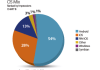 Mobile ad network Millennial Media, is releasing its monthly report which gives a view into how each OS, device and manufacturer is performing on one of the largest remaining independent ad networks in the world. In August, Millennial actually combined connected devices and smartphones when breaking out the OS impression share. That’s significant because iOS and Android share can include tablets into factoring presence on the network. And last month, Android was in the top spot with a 54% share, while iOS was in second with a 28% share. Rim followed with 13% share. In terms of growth, Android impressions (including both phones and tablets) grew 48% month-over-month globally. iOS impressions were relatively flat month-over-month, and interestingly Windows Phone 7 impressions saw major growth and increased 48% month-over-month. Smartphones grew 6% month-over-month and took 72% of the impressions in August. Connected Devices and Feature Phones were tied with 14% of the impression share. In terms of impressions by type of connection, 32% of impressions came over Wi-Fi. Of these WI-Fi impressions 59% came from Smartphones (as opposed to connected devices or feature phones), and saw an 11% growth month-over-month. Connected Devices, including Tablets, gaming devices, and eReaders, accounted for 34% of the Wi-Fi impressions on the network. In August 2010, feature phones accounted for 33% of Millennial’s network impressions, and this number has dropped to 14% in August 2011. Millennial also breaks down ad spend from applications on the network, and in August Android grew 2% month-over-month and represented 49% of the Application Platform Mix. iOS followed with 41% share, with RIM taking a 8% share. In August, News applications on the Android platform grew 26% month-over-month. Gaming applications have been the number one Application Category on Millennial’s network for over a year and in August, games represented 25% of the applications impressions, a 19% increase month-over-month. Music & Entertainment application impressions grew 13% month-over-month and within the Music & Entertainment category, radio applications accounted for more than half of the impressions in August. Similar to July’s findings, Apple continued to be the leading device manufacturer the network in August, representing 23% of the Top 15 Manufacturers impression share. The iPhone maintained the number one position on the Top 20 Mobile Phones ranking with 13% of the impression share. HTC actually reclaimed the number two position on the Top 15 Manufacturers ranking in August, thanks to the manufacturer’s five devices on the Top 20 Mobile Phones list. Together, these HTC phones accounted for 11% of the Top 20 Mobile Phone impressions. Together, all Android phones The past year has represented major growth for Millennial Media. The company just announced that 2010 revenue was $47.8 million, which is up over 3,000 percent from 2007 revenue of $1.5 million. And we know CEO and founder Paul Palmieri has had ambitions of taking the company public. In May, Bloomberg reported that Millennial was talking to bankers about an IPO, which could come in the Fall or in early 2012 and would value the company at a whopping $700 million to $1 billion (AdMob was sold to Google for $750 million). Millennial Media is the leading independent mobile advertising and data company. Millennial Media commands an impressive share of the mobile display advertising market. The company's technology, tools and services also power some of the largest companies in the media business today. Millennial Media is committed to growing the mobile advertising marketplace by becoming the preferred partner to advertisers seeking to reach mobile consumers, application and media developers seeking to maximize ad revenue, and mobile operators seeking to further monetize...
|
| Basis Reveals An Awesome New Affordable Heart And Health Tracker You Can Wear On Your Wrist Posted: 22 Sep 2011 07:25 PM PDT 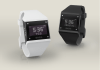 After raising $9 million in venture funding from Norwest Venture Partners and Doll Capital Management earlier this year, Basis Science has been able to continue their year-long research and design development of a new affordable heart and health monitor that can be worn all the live-long day right on your wrist. In anticipation of its showcase at Health 2.0, the startup is today revealing the design and features of its so-called “B1 Basis Band” that will launch in the market later this year. While there are a number of health-tracking devices on the market today, the Basis Band seems poised to be a disruptive product in the health space. Priced at $199, the Band is on the expensive side but not unreasonable considering the heart and health tracker boasts multiple sensors that measure heart rate continuously, along with calories burned, sleep patterns, and other physiological metrics. What’s more, the device boasts an LCD touchscreen interface that allows for easy navigation and displays the date and time — potentially making it a pretty great replacement for your measly old wrist watch. Of course, what makes this new health product so cool is that it is connected to a (free) web-based personal dashboard that allows users to view comprehensive data pulled from the device’s monitoring of your heart rate, sleep, and more. The dashboard then helps you further keep track of your overall health and wellness by offering push notifications, suggestions, and a game-ified experience that encourages you to set goals and monitor your progress, or blast health dates to friend and family over social networks. The data that Basis aggregates is also easily exportable, so that you’ll be able to send your health information to your personal trainer or your physician. Obviously, with the state of the health as it is today, along with the rising costs of healthcare, many people are looking to maintain a more active and healthy lifestyle to avoid those high medical bills and trips to the doctor’s office. As most health devices on the market today attempt to calculate heart rate through footsteps or by using a smartphone’s accelerometer or GPS, said Basis CEO Jef Holove, the Basis Band offers an evolved alternative, as it uses a series of monitors to decipher health data directly from your wrist and the bloodflow underneath. This optical engine tracks heart rate by directing light into the skin to “see” the user’s blood flow and is complemented by several other sensors, including a heat sensor that tracks skin and ambient temperature changes, a 3-axis accelerometer that records movement and activity, and galvanic skin response sensors. The device then uses a series of algorithms to cut through the noise and make a number of calculations that result in a precise picture of how many calories you’ve burned, the total amount of physical exertion, sleep patterns, and so on. That data is then served to Basis’ cloud infrastructure and presented to the user in that easy-to-navigate web interface. Pretty cool. What’s more, as the Basis Band has multiple-day battery life and is composed of polycarbonate (and is water-resistant), it’s lightweight, doesn’t get in the way, and can be worn day and night without any maintenance. It’s also modular, which means that you can change straps, both in color and style, to meet your award-winning sense of fashion. All in all, this makes for a welcome change from cumbersome chest-strap EKGs, or arm-band monitors that only offer basic functionality and that you can really only wear while running. Basis is also announcing today that it is appointing an advisory board that includes some medical, social, and gaming big whigs to help oversee the impending launch of the Basis Band. The new advisory team will boast long-time Facebook executive (and early employee) Kevin Colleran, along with Charles and Kai Huang, the co-founders of RedOctane and creators of Guitar Hero, as well as Patrick McGill, Daniel Kraft, a Stanford and Harvard trained physician, and Jeff Rosenthal, who will be bringing his co-founders of the Summit Series along for the ride. Chris Verplaetse, who is being added as vice president of device development, was most recently at Cisco Systems, where he was a key engineer in the development of Flip Video. The addition of these experts to its advisory team is a big strategic win both for Basis and the health industry, and is a sign that these smart, integrated devices like the Basis Band are attracting attention from experts across the board. With a sizable team in place and a sharp new product ready for launch, Basis could just be at the front of a game-changing shift in consumer health products. It’s pretty amazing stuff. Check out Basis at home for more information. Basis believes it's easier to get and stay healthy when wellness is fun, social and informative. To put this within everyone's reach, we invented the Basis Band – the world's first connected health and heart rate monitor wearable on the wrist. Convenient and customizable, the multi-sensor Basis Band collects data like heart rate, calories burned, physical activity and sleep patterns. It links wirelessly to your personal dashboard where you can easily view performance, share data, earn rewards, and...
|
| FakeGirlfriend.co Lets You Text With Your Made-up Canadian Model Girlfriend Posted: 22 Sep 2011 04:08 PM PDT  “Whatever, man. I’ve got 10 girlfriends. And they’re supermodels! You just don’t know them, because they live in Canada.” “Oh, okay. Call one of them and prove it.” Well, crap — now what? Enter FakeGirlfriend.co, a clever little service that lets you text your maybe-not-so-real girlfriend in a pinch, get a text back, and have her “call you back” a few minutes later. Because that’s totally not a weird thing to do, right? Here’s how it works:
Of course, this thing probably won’t fool anyone over the age of 10, if only because your digital-girlfriend’s prerecorded message has a tendency to talk through any and all interruptions and doesn’t respond to anything directly. And if it does work, you still know that you’re kind of weird. If anyone asks, just remember: like a bag of sand. (Side note: You would not believe how many weird stares I got while working on this post in a coffee shop.)
|
| Despite Apple’s Efforts, Motorola Wants To Keep The Patent Battle Going Posted: 22 Sep 2011 01:20 PM PDT  Just over a week ago, Apple filed requests with the Western District Court of Wisconsin and the Southern District Court of Florida to put their current patent battle with Motorola at a stand-still. In the request, Apple argued that Motorola’s acquisition deal with Google created a situation in which Motorola does not have standing to litigate or settle legal disputes, as it has ceded its patent control over to Google. Well, Motorola wasn’t cool with this plan and has asked the court to keep things moving along. In the 15 pages of legal jargon, Motorola says that if the court is leaning toward granting the stay for Apple, then Motorola would like the opportunity to fix its standing issues. Here’s the full quote from the response: Right now, it’s still kind of unclear what Motorola means by “cure the defects.” The merger agreement between Motorola and Google (most of which is highly confidential) includes clauses that limit Motorola’s ability to litigate and settle, without the consent of Google. At the same time, Google can’t withhold said consent without a solid reason. Chances are that the most likely way to “cure the defects” would be an additional agreement between Google and Motorola that allows Motorola to move forward with this litigation. Still, Motorola made absolutely no mention of actually talking this out with Google, nor is there a suggestion that Google will agree to it. But without Google’s permission, Apple “has a strong case as far as MMI’s right to settle is concerned,” according to FOSS Patents’ Florian Mueller. Until the Googorola transaction is officially closed, Motorola must operate as its own independent company under its own management, according to the terms of the agreement. However, in whatever way Google and Motorola are allowed to communicate at this time, it would be shocking to find that Google was unaware of Motorola’s request to push things along. Company: Motorola Mobility Website: motorolamobility.com Motorola is known around the world for innovation in communications and is focused on advancing the way the world connects. From broadband communications infrastructure, enterprise mobility and public safety solutions to mobile and wireline digital communication devices that provide compelling experiences, Motorola is leading the next wave of innovations that enable people, enterprises and governments to be more connected and more mobile. Motorola (NYSE: MOT) had sales of US $22 billion in 2009 Started by Steve Jobs, Steve Wozniak, and Ronald Wayne, Apple has expanded from computers to consumer electronics over the last 30 years, officially changing their name from Apple Computer, Inc. to Apple, Inc. in January 2007. Among the key offerings from Apple’s product line are: Pro line laptops (MacBook Pro) and desktops (Mac Pro), consumer line laptops (MacBook) and desktops (iMac), servers (Xserve), Apple TV, the Mac OS X and Mac OS X Server operating systems, the iPod (offered with... Google provides search and advertising services, which together aim to organize and monetize the world’s information. In addition to its dominant search engine, it offers a plethora of online tools and platforms including: Gmail, Maps and YouTube. Most of its Web-based products are free, funded by Google’s highly integrated online advertising platforms AdWords and AdSense. Google promotes the idea that advertising should be highly targeted and relevant to users thus providing them with a rich source of information....
|
| NASA Releases Historical Sound Bites As Ringtones Posted: 22 Sep 2011 11:01 AM PDT  Space buffs like me are sure to get a kick out of this one: NASA has released a score of historical sound bites from the space program for use as ringtones or system sounds. I ask you, what could be more appropriate to herald an error on your PC than Jack Swigert’s “Houston, we have a problem” from Apollo 13? Or, alternately, what better way to celebrate a successful boot than listening to the ground crew celebrate Apollo 11′s liftoff? The sounds on offer range from bizarre (like Saturn: Radio Emissions #1) to funny (the guys on Apollo 12 really had a sense of humor) to heartwarming (think Apollo 8′s “Merry Christmas” to the planet earth). While I appreciate NASA doing a solid for all us smartphone users, and as cool as it is to have snippets of history on your phone, only a few of the sounds really have what I call “ringtone potential.” The Sputnik beep? Sure, why not. Sally Ride comparing her first shuttle launch to a ride at Disneyland? Not so much. In an effort to be as platform-agnostic as possible, all the sounds are available as MP3s and M4Rs. Android users have an easier time of things here, as all they need to do is download (or update) the NASA App from the Android Market.
|
| Kickstarter: Stick Your iPhone To Your Bike With The Action Case Posted: 22 Sep 2011 10:01 AM PDT  If you had your heart set on taking some rad video of your skateboarding moves but spent your hard-earned dough on an iPhone 4 instead of a GoPro camera, you’re in luck. A graphic designer from California has designed a beefy enclosure for the iPhone 4 that is compatible with all of GoPro’s action-friendly mounts. The iPhone 4 has a solid camera built into it, but the glass plates on both sides meant there was a limit as to how extreme your life could be while carrying one. The Action Case takes care of that: it’s made of a durable polypropylene plastic and is held together by a set of stainless steel pins. Friendly warning: the Action Case isn’t waterproof, so while you can definitely mount your iPhone on your surfboard, you’re almost certainly going to regret it. Also, the touchscreen is left uncovered (for obvious reasons), so don’t go thinking your phone is suddenly Superman. The Action Case isn’t going to win any style awards, but that’s really not the point. You stick your phone on a GoPro mount, attach it to… well, anything really, and let the cool footage start rolling in. Backers who pledge over $49 get first dibs on an Action Case, while each successive level after that nets you different GoPro mounts with which you can go crazy. At time of writing, only two backers have thrown their money at the Action Case, but the project has another 38 days to hit the $25,000 mark. It could be worth checking out, if only to please the broke, iPhone-toting snowboarder in your life.
|
| With Swampy The Alligator, Disney Takes Aim At The Angry Birds Empire Posted: 22 Sep 2011 08:27 AM PDT  While most studios team up with developers to create games that support existing properties, Disney is going the opopsite direction with the release of their latest iOS game. Their goal for Swampy the Alligator here isn’t just to snag the top spot for app purchases: they want to see him break into movies and merch too. In short, they want this alligator to be like the Angry Birds. Swampy stars in Disney Mobile’s “Where’s My Water?”, and while he lives in the sewers, he’s (ironically) a bit of a clean freak. Players must direct water into Swampy’s shoddy plumbing by cutting paths through the ground, all so Swampy can get his much-needed shower. A few quick minutes playing the game has confirmed my suspicions: it already seems to have the same addictive charm that made Cut The Rope and Angry Birds such efficient timewasters. Methinks that’s exactly what Disney Mobile GM Bart Decrem had in mind. Formerly the CEO of Tapulous, makers of one of iOS’s first rhythm games, Decrem has a very keen awareness of what gives a mobile game the “stickiness” that keeps players coming back. He notes in an interview with the AP that the mobile space is huge with Disney’s target audience, saying that “this is where a generation of kids is growing up.” He thinks it’s important for Disney to be able to tell compelling new stories on a platform that kids are falling in love with. Decrem has also said that one of the goals of the launch was to “incubate new characters that can cross over into other Disney business units like movies and merchandise.” Even if Swampy doesn’t quite make it, it seems it’s now a priority for Disney Mobile to take on the Angry Birds. Angry Birds, if you’ve been lucky enough to live under a rock for the past few months, has spawned a truly obscene amount of merch. Angry Birds clothing, toys, and (less officially) Chinese moon pies have all been spotted, and there’s even word that a movie is in the works. It’s a lofty goal for Disney to shoot for, but one that they’re uniquely equipped to take advantage of if Swampy’s fame transcends his game. Assuming the interest is there, a Swampy movie could become a reality sooner than expected because Disney can essentially do all the production work in-house. Of course, the company also already has the connections with manufacturers to quickly (and cheaply) churn out gobs of Swampy merchandise. Disney has proven themselves to have considerable muscle when it comes to cross-promotion too, so if this app happens to take off, expect to see Swampy toys in your kid’s Happy Meal before too long. The game has just gone live in the App Store today, and it’ll run you $.99 — we’ll have to see if Disney’s ambitions are realized, but it’s a great timewaster nonetheless.
|
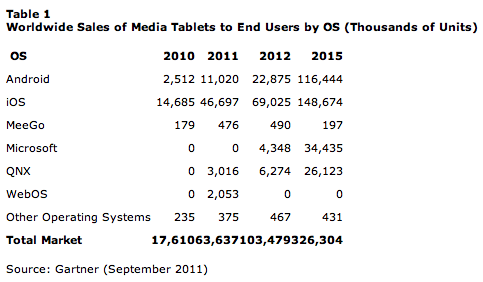
| Gartner: Apple iPad Will Be Top Tablet Through 2014 Posted: 22 Sep 2011 06:57 AM PDT 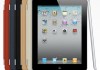 The analysts at Gartner have released a new report today, detailing tablet market trends and forecasts. Not surprisingly, their findings confirm the obvious: the iPad is killing it. According to the firm, the Apple iPad will account for 73.4% of tablet sales worldwide this year, and no other platform besides Android will have more than a 5% share of the market during this time. In addition, Apple will continue to have more than 50% of the tablet market until 2014, according to research VP Carolina Milanesi, a stat that she attributes to Apple’s foresight to create this market in the first place, and Apple’s “superior and unified user experience across its hardware, software and services.” Milanesi suggests that competitors who don’t deliver a similar experience won’t be much of a challenge to Apple going forward. That said, competitors’ offerings did affect Apple’s tablet sales ever-so-slightly. Apple is projected to have, as noted above, 73.4% of the market in 2011, but that’s down from 83% in 2010. Meanwhile, Android tablets will account for 17.3% of the market this year, with 11 million units shipped. Last year, Android accounted for 14.3% of the market share. But Gartner is lowering Android’s forecast from last quarter’s projection, Milanesi said, because the platform has been “constrained by high prices, weak user interface and limited tablet applications.” The reduction would have been even greater, Gartner claims, if not for the success of low-end tablets in Asia and the expectation around Amazon’s Android tablet. (Which, frankly, the firm may be underestimating a bit.) Not everything seemed entirely on point with the report. For example, Gartner called RIM’s QNX OS a “promising platform” but said the company is “going through a tough period.” That’s more than kind, given RIM’s troubles and plummeting market share. Calling RIM’s current situation “a tough period” seems to imply that the smartphone maker will reach the other side at some point, wipe its brow, and exclaim, “Whew! We made it!” Whether that will actually happen is decidedly unclear. Gartner is less kind to Windows 8, whose future may be limited by its late arrival. The platform’s best opportunities may be in the enterprise, Gartner says. As for anyone daring to take on iPad, the focus should be matching screen quality and processing power on the hardware side, with everything else considered “nice to have, rather than essential.” On the platform side, apps, an intuitive user interface and the ability to share content between devices matter most. Good luck, non-iPads. That’s a tough order to fill. Started by Steve Jobs, Steve Wozniak, and Ronald Wayne, Apple has expanded from computers to consumer electronics over the last 30 years, officially changing their name from Apple Computer, Inc. to Apple, Inc. in January 2007. Among the key offerings from Apple’s product line are: Pro line laptops (MacBook Pro) and desktops (Mac Pro), consumer line laptops (MacBook) and desktops (iMac), servers (Xserve), Apple TV, the Mac OS X and Mac OS X Server operating systems, the iPod (offered with...
|
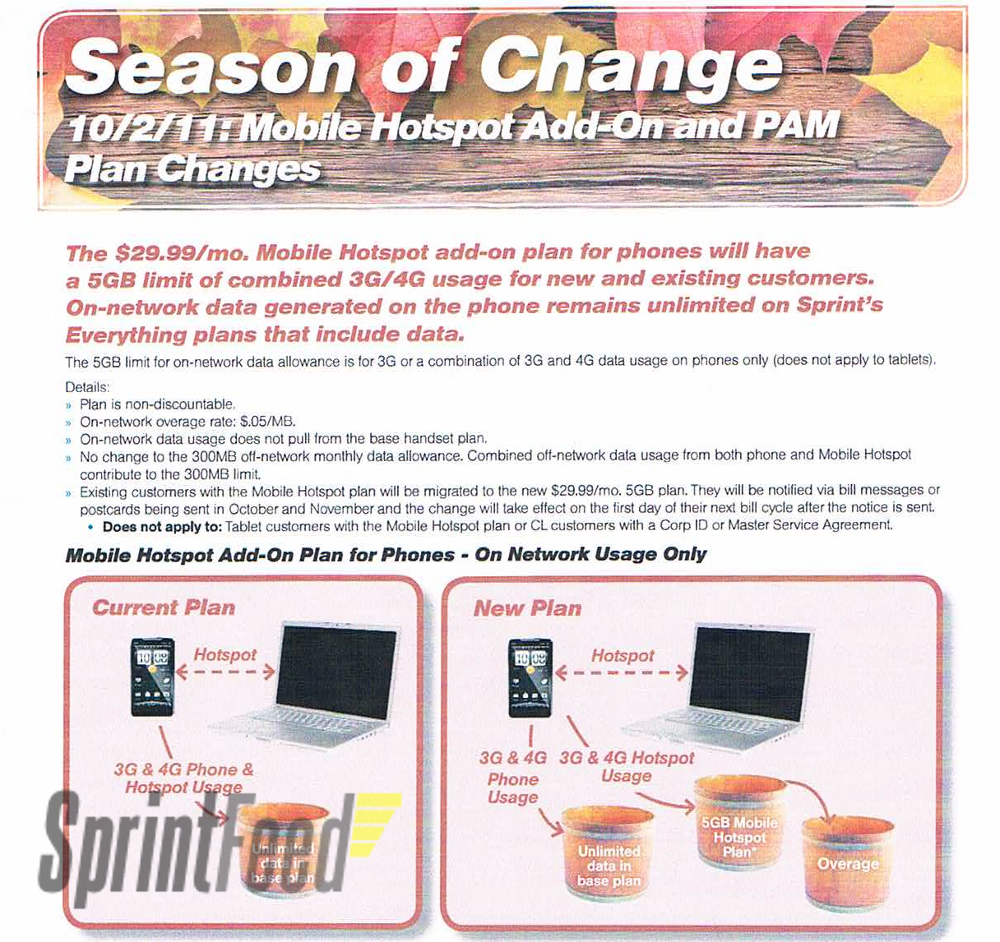
| Sprint To Cap Unlimited Hotspot Data On October 2? Posted: 22 Sep 2011 06:44 AM PDT  Rumor has it that the iPhone 5 will be headed to Sprint in the coming weeks. In the lead-up to that, Sprint’s implemented some big cut-backs/price hikes, including a jacked up early termination fee and the discontinuation of Sprint Premier. But one thing has remained the same, and according to Sprint, it will remain the same through the launch of the iPhone: unlimited data. That is, of course, unless that data is coming through a mobile hotspot data plan, in which case unlimited is no longer an option. According to a leak out of Sprint Feed, good ol’ yellow will be adding a 5GB cap to their mobile hotspot plans on October 2, with overage charges at five cents/MB. The good news is that this cap only affects the $30/month mobile hotspot data plan, so your regular unlimited data is safe to enjoy. But you should make the most of it while you can — there’s no telling how long Sprint can keep up unlimited data on the iPhone. Verizon, with one of the most robust networks in the nation, couldn’t keep their word regarding unlimited data when the iPhone hit their network. Sprint is much smaller, and while unlimited data is basically the carrot they’re dangling to lure folks away from the big guns, it’ll be much more difficult to sustain. Check the image below for a peek at that leaked document. Sprint Nextel offers a comprehensive range of wireless and wireline communications services bringing the freedom of mobility to consumers, businesses and government users. Sprint Nextel is widely recognized for developing, engineering and deploying innovative technologies, including two wireless networks serving almost 49 million customers at the end of the second quarter of 2009; industry-leading mobile data services; instant national and international push-to-talk capabilities; and a global Tier 1 Internet backbone.
|
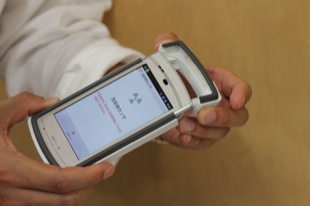
| NTT Docomo’s Cases Make Smartphones Measure Radiation, Body Fat, Alcohol Posted: 22 Sep 2011 05:45 AM PDT 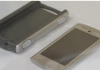 Japan’s biggest mobile carrier NTT Docomo unveiled a few pretty interesting smartphone add-ons today. Perhaps most notable are a set of special cases the company developed to not provide extra protection but to add unique functions to the handsets they are used with. These jackets essentially turn smartphones into dosimeters, and there are three of them: one to measure radiation, another that keeps track of the user’s body fat and muscle bulk, and a third model that measures the alcohol content in the user’s body (plus bad breath). NTT Docomo says that sensors built into the cases do the actual job, while the smartphone itself serves as the interface and displays the results. Needless to say, all data can be saved for future reference. This jacket, for example, helps measure radiation: The company plans to showcase the cases during the CEATEC Japan 2011 exhibition next month. Here’s a video from Penn Olson shot at Docomo’s CEATEC preview press conference today: Via Penn Olson
|
| You are subscribed to email updates from TechCrunch » Mobile To stop receiving these emails, you may unsubscribe now. | Email delivery powered by Google |
| Google Inc., 20 West Kinzie, Chicago IL USA 60610 | |