MobileCrunch |  |

- Japan Gets 8 New Cell Phones: KDDI’s Entire Winter Line-Up
- ARROWS Z: Fujitsu-Toshiba Outs Waterproof Android Phone With Wimax, 13MP Camera
- Startup Japan: A Silicon Valley Entrepreneur Visits Onlab, A Young Japanese Incubator
| Japan Gets 8 New Cell Phones: KDDI’s Entire Winter Line-Up Posted: 26 Sep 2011 04:12 AM PDT  Japan's second biggest carrier KDDI took the wraps off [JP] a total of eight new cell phones for the domestic market today. To be more concrete, the telco (which is likely to become the second in Japan to provide the iPhone 5) showed six Android handsets (the Arrows Z is the most impressive) and two feature phones. Here are all models that KDDI showed today: Fujitsu Toshiba Arrows Z ISW11F Kyocera DIGNO ISW11K HTC EVO 3D ISW12HT MOTOROLA PHOTON ISW11M Sharp AQUOS PHONE IS13SH NEC MEDIAS BR IS11N Fujitsu-Toshiba F001 Sony Ericsson URBANO AFFARE
|
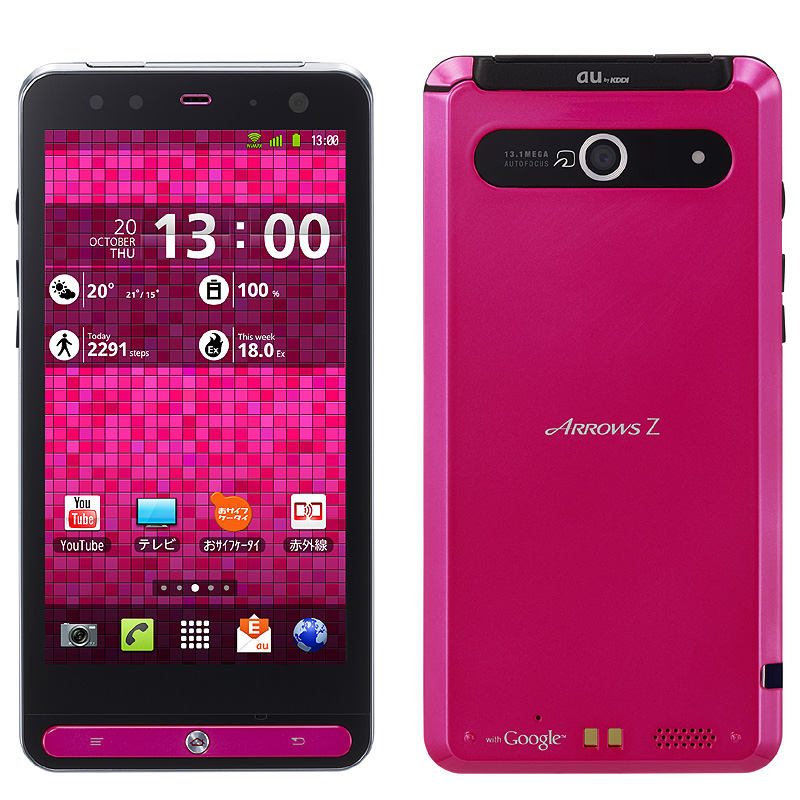
| ARROWS Z: Fujitsu-Toshiba Outs Waterproof Android Phone With Wimax, 13MP Camera Posted: 26 Sep 2011 02:20 AM PDT  It will probably take a few more months until Japan’s five major cell phone makers really start shipping smartphones to the US and other regions, but in their home market, all signs point to an Android future. Japan’s second biggest carrier KDDI au, for example, unveiled [JP] a total of six new Android phones for its winter line-up today, and Fujitsu-Toshiba Mobile’s ARROWS Z ISW11F is probably the most interesting model. The device comes with the following features:
KDDI plans to start offering the ARROWS Z ISW11F to subscribers in Japan in November.
|
| Startup Japan: A Silicon Valley Entrepreneur Visits Onlab, A Young Japanese Incubator Posted: 25 Sep 2011 06:25 AM PDT  Editor’s Note: This is a guest post by Brenden Mulligan, entrepreneur and creator of Onesheet, who is currently traveling around the world meeting startups with his wife and IDEO designer Elle Luna. You can follow him on Twitter here: @bmull. Before coming to Japan, we asked everyone we knew for advice on how to connect with the startup community in Tokyo. Every recommendation pointed at the exact same place: Open Network Lab. Open Network Lab (“Onlab”) is a Japanese startup incubator in the same vein as Y Combinator or TechStars. The incubator provides startups with mentorship, office space, and a small amount of cash in exchange for a piece of equity. This model is popular in the United States, and leading Japanese internet company Digital Garage (investors in Twitter, Path, and more) wanted to try it in Japan. Onlab is currently in its second year of operation has incubated three batches of startups. Even though it’s a young program, they are already making an noticeable impact on the Japanese startup community. We spent our first hour talking with Hironori (Hiro) Maeda, the guy in charge of overseeing the incubator’s operations. Hiro grew up in Japan and attended an international school before going on to study computer science at Bucknell University. After college, he launched a startup of his own, and several years later was asked to return to Japan to help build and run Onlab as a way to move the Japanese entrepreneurial community forward. But developing that community has its cultural challenges. “Launching a startup, where there is a lot of uncertainty and unsuitability, does not fit a culture where harmony and stability are strongly emphasized,” Hiro told us. “However, a lot of younger Japanese are realizing that the nation itself is at uncertainty. The employment rate of college graduates have reached the lowest point in the past decade and the Japanese earthquake has made the people in entire nation uncertain about their future. The uncertainty and the increasing interest of the success that Silicon Valley is experiencing has made more younger Japanese take bigger risks.” This has led to a ton of interest in Onlab from both entrepreneurs and the general public. This interest doesn’t come without its hurdles, however. Even though the community is willing to take risks, Hiro says it’s just not quite ready to be as transparent as entrepreneurs in other parts of the world. “Entrepreneurs in Japan haven’t realized the benefits of transparency and sharing information. People are afraid of sharing ideas and experiences — thinking that it is their only competitive advantage”, he said. In more mature startup communities like Silicon Valley, entrepreneurs share their war stories on a regular basis. And they don’t hide their failures, but instead embrace them and try to help others avoid it. Hiro knows this, and is fostering the same type of communication with his startups: “We encourage failed entrepreneurs to move on to their next idea and hope that they will see their failure as an experience they can take advantage of for their next venture.” Hiro also requires his startups to get together at least once a week to discuss ideas that have worked, tasks that they found challenging, and points in they’re development where they’re getting stuck. Although it doesn’t necessarily come naturally, it’s working. Hiro says these sessions are getting better and better and the entrepreneurs are seeing the value in openness and transparency. And Japan is taking notice. When we were there, national network Tokyo TV was spending the day filming the lab and talking to the startups. When they found out some people from Silicon Valley were visiting too, they asked us to sit down for an interview. Most of the questions were around whether or not Japan had the ability to compete with Silicon Valley and whether Onlab could work. Overall, my responses were that it was already working. People are learning about this community all over the world and Onlab has started to put the Japanese entrepreneurial community on the map. We also spent a few hours talking to and mentoring the startups (listed below). Overall, the companies were on par with the types of startups you see in the Bay Area’s incubators. There was an impressive focus on design and user experience and most had well-fleshed out business models and quality prototypes. As a taste of what Onlab has been producing, here is a quick look at a few of the incubator’s current startups: Giftee FindJPN ABCLoop Pirka Dressful Mieple Our advice: Pay attention to what Onlab is doing and expect to see it develop and inspire a new generation of Japanese entrepreneurs. Person: Brenden Mulligan Companies: ArtistData, Sonicbids, Untappd, Mission Labs, MorningPics, Onesheet Brenden Mulligan is a San Francisco based entrepreneur who founded ArtistData, an industry leading marketing platform that helps over 40,000 musicians syndicate content across web presences. ArtistData was acquired by Sonicbids in 2010. Currently, Brenden is working on a variety of projects, including MorningPics, PhotoPile, and several other upcoming products. He advises startups through 500Startups, ExcelerateLabs, and individually. He blogs at StartingUp.me, and can be found on twitter @bmull. His love of travel has taken him through Southeast Asia and through...
|
| You are subscribed to email updates from TechCrunch » Mobile To stop receiving these emails, you may unsubscribe now. | Email delivery powered by Google |
| Google Inc., 20 West Kinzie, Chicago IL USA 60610 | |