MobileCrunch |  |

- Realtime Parking Info Provider Parking In Motion Lands Series A Funding
- Air Voltage: Maxell Japan Announces Wireless Charger For iPad 2
- Private Jet Booking Network PrivateFly.com Raises £2 Million
- Hitachi Develops Low-Cost, High-Quality 4.5-Inch LCDs For Phones
- Facebook’s Mobile Chief: Within 1-2 Years, We’re Going To Be A Mobile Company
- T-Mobile Spots HTC Radar 4G On Horizon, Set For Holiday Launch
- Shopkick By The Numbers: 700M Product Views; 7M Product Scans; 2.3M Users In The Past Year
- Skype Rolls Out Ads, Bluetooth Support In iOS App Update
- Distimo’s Latest Report Reveals Mobile App Localization Trends
- Xobni Rebrands Its Product Smartr, Launches Contact Manager For Android And Gmail
- Sprint’s 4G LTE Network To Go Live Early Next Year?
- Rexly Takes Its Social Music App To The iPhone
- Professional Content Sharing Platform SlideShare Goes Mobile With New HTML5 Site
- Leading Mobile Device Makers Pledge Support For Carrier-Led NFC Venture Isis
- Huawei Taps Discovery Channel To Build Discovery Expedition Rugged Handset
- Microsoft Files More Patents For Dual-Screen Swiss Army Knife Slider Phone
- Windows Phone Marketplace Is Now Available In A Browser Near You
| Realtime Parking Info Provider Parking In Motion Lands Series A Funding Posted: 28 Sep 2011 04:32 AM PDT  Parking In Motion has raised an undisclosed amount of capital in a Series A financing round co-led by IDG Ventures and Fontinalis Partners, the investment firm co-founded by William Clay "Bill" Ford Jr., the great-grandson of Henry Ford (and Executive Chairman of Ford Motor Company). The additional capital will allow Parking In Motion to deliver its real-time parking database to automobile navigation systems, mobile phones, tablets and other data aggregators. The company works with cities and private garage operators to direct drivers to available parking spaces across the US, Canada, and Europe. Parking In Motion taps into existing infrastructure such as smart parking meters, sensors, and parking gates, enabling it to inform drivers of occupancy and pricing information in real-time. Parking In Motion covers more than 25,000 parking locations in 500+ cities, 19 countries and 3 continents, including both on-street and off-street parking locations. The company currently delivers its information to users through its branded mobile apps and partnerships with navigation providers, mobile app developers and publishers, and other partners. Parking In Motion was co-founded by Sam Friedman and Alex Israel and is headquartered in Santa Monica, California. Parking In Motion is the leading provider of professional, dynamic parking data, retaining distribution deals with App developers, map makers, and GPS navigation providers. The Parking In Motion database is the largest of its kind, offering complete coverage of the U.S., Canada, the UK, France, and Germany, with 20,000 public parking lots enhanced with rates, hours, and occupancy information. The database also includes on-street meter and sign restrictions in the top 26 U.S. markets. Building on its resources and...
|
| Air Voltage: Maxell Japan Announces Wireless Charger For iPad 2 Posted: 28 Sep 2011 04:19 AM PDT  Hitachi Maxell, in cooperation with Murata, has announced [JP] the so-called Air Voltage for the Japanese market today, a combination of a wireless charging pad (dubbed “Energy Stand”) and jacket (“Energy Cover”) specifically for use with the iPad 2. According to Maxell, the device is the first of its kind (mass-produced). The way it works is that users put their iPad 2 into the jacket, place it on the pad and let the Air Voltage system charge the tablet – no cables required. Maxell says that the wireless power transmission of 10W takes about 3 hours for a full charge, as long as charging the iPad the conventional way (AC adapter). Owners can place the iPad 2 on the pad/stand either horizontally or vertically and keep using the tablet while it’s being charged, too. Maxell plans to start selling the Air Voltage in Japan on November 25 for $196. Murata, the maker of the wireless power transmission module that’s built into the Air Voltage, has set up a detailed web page that explains the product in English (here‘s a video).
|
| Private Jet Booking Network PrivateFly.com Raises £2 Million Posted: 28 Sep 2011 04:10 AM PDT  We’ll all been there. You are craving that delicious sandwich from that place a couple of miles from your home for lunch, when you realize your wife took the car to go shopping (again). So you hop online, looking to compare prices for the best private aircraft and nearest available flight, and begin to search frantically for a website where you can quickly charter a helicopter or small private jet so you can get that smoked salmon and avocado sandwich pronto. PrivateFly.com feels your pain, and has established a private aircraft booking service that lets you find, compare and book your private charter jet or helicopter flight all in one, online place. The company has just raised £2 million from a number of private investors to roll out internationally. Read on at TechCrunch Europe.
|
| Hitachi Develops Low-Cost, High-Quality 4.5-Inch LCDs For Phones Posted: 28 Sep 2011 02:04 AM PDT  Back in February this year, Hitachi Displays took the wraps off a super-advanced LCD for smartphones that boasted a 4.5-inch IPS LCD with 720 x 1,280 resolution. Fast forward to today, and the company is now announcing [JP] the development of a very similar panel with (almost) the same quality that costs “10-20%” less than touch displays currently used in smartphones. This new panel shares the main specs with the one shown in February: same size and resolution, 500cd/m2 brightness, LED backlight, and 329ppi pixel density. The only difference is that the older model had a better contrast ratio (1,100:1 vs. 1,000:1). And this time, Hitachi used amorphous polysilicon to manufacture the display, a material that’s often used for making TVs and that’s cheaper than the low-temperature polysilicon smartphone panels usually are made of. Hitachi Displays (or possibly Japan Display) expects to begin mass-production of the new LCD display by the end of this year, targeting phone makers in Japan and abroad. Note: the picture shows the old model, as Hitachi hasn’t released one showing the new display.
|
| Facebook’s Mobile Chief: Within 1-2 Years, We’re Going To Be A Mobile Company Posted: 27 Sep 2011 03:03 PM PDT  Facebook has their sights locked on mobile. We know that. This afternoon at GigaOm’s Mobilize conference, Facebook Mobile Chief Erick Tseng touched on just how crucial mobile is to them — and more importantly, how crucial it will be. Just how crucial are we talking about? Within 1-2 years, Tseng sees Facebook becoming as much of a mobile company as it is a desktop/web company.
It’s kind of funny to think that Facebook might not already think of themselves as a predominantly mobile company. They’re already the most popular app on nearly every smartphone platform, are deeply integrated into countless Android devices, and 43% of their active user base of 800 million is using mobile on a regular basis. What else can they really hope for? Oh, thats right: to take over the mobile world with a development platform of their very own. Oh, and as for that iPad app: “Yeah.. the iPad app. The iPad is great. It’s a fantastic device.. (pause).. but nothing to announce at this point. If you want to get the Facebook fix, there are a number of [iPad] apps that weren’t developed by us.” Facebook is the world’s largest social network, with over 500 million users. Facebook was founded by Mark Zuckerberg in February 2004, initially as an exclusive network for Harvard students. It was a huge hit: in 2 weeks, half of the schools in the Boston area began demanding a Facebook network. Zuckerberg immediately recruited his friends Dustin Moskowitz and Chris Hughes to help build Facebook, and within four months, Facebook added 30 more college networks. The original idea for the term...
|
| T-Mobile Spots HTC Radar 4G On Horizon, Set For Holiday Launch Posted: 27 Sep 2011 01:05 PM PDT  Looks like the HD7 won’t be the only Windows Phone on T-Mobile’s shelves for much longer. Right on the heels of yesterday big smartphone announcement, T-Mobile has pulled back the curtains on the newest Windows Phone in their lineup: the HTC Radar 4G. The Radar was one of two Windows Phones revealed at IFA by HTC, and while AT&T made sure to snag the big boy, the Radar is no slouch. It sports a rather handsome white aluminum body, while a 3.8-inch LCD display running at 800×480 graces the Radar’s front. Meanwhile, you’ll find 1 GHz Qualcomm Snapdragon processor running the show, and a 5 MP camera planted firmly on the phone’s rear end to round out the package. Sure, the specs aren’t exactly mindblowing, but they place the Radar far above T-Mobile’s original Windows Phone efforts. The HTC HD7 was essentially a slightly-tweaked HD2, meaning that Windows Phone left the gate at Bellevue saddled with dated hardware. Given the timing of the announcement, it should come as no surprise that the Radar runs Redmond’s long-awaited Mango version of WP7. While we’re on the subject of timing, T-Mobile is keeping quiet on the Radar 4G’s release date, but they’re quick to assure readers that it’ll be in stores in time for a holiday rush.
|
| Shopkick By The Numbers: 700M Product Views; 7M Product Scans; 2.3M Users In The Past Year Posted: 27 Sep 2011 10:34 AM PDT  We’ve written plenty of times about Shopkick, an innovative geo-coupon system that has received funding from Kleiner Perkins, Greylock, SV Angel and others. Today, the company is revealing a number of impressive stats about its service. Instead of checking in, as you would with a geo app like Foursquare or Gowalla, shopkick automatically recognizes when someone with the free Android or iPhone app on their phone walks into a store. Once a shopkick Signal is detected, the app delivers reward points called “kickbucks” to the user for walking into a retail store, trying on clothes, scanning a barcode and other actions. Kickbucks can then be redeemed across all partner stores for gift card rewards or for Facebook Credits. User can also receive special discounts on specific products at partners stores like Macy’s, Best Buy or Target. Since the application’s launch in August 2010, Shopkick has seen a whopping 700 million product views, and the startup expects to pass 1 billion product views this year. There have been over 2 million physical walk-ins to stores (which are measured from the shopkick signal device installed at the store). The device is installed at 3000 large stores and 250 malls now. Shopkick users open the apps on average on 14 days per month (often several times a day). Each day they open the app, they look at 16 stores on average. That means, per month they look at over 200 stores via the app on average. And users have scanned 7 million products over the past year, which is up from 3 million in February. And application now has 2.3 million U.S. users. It took 7 months to reach its first 1 million users and only 4 months to reach its second million users. National retail partners in the loyalty program include Target, Best Buy, Macy's, Crate & Barrel, American Eagle, Sports Authority, Toys R Us, Simon Malls and others, and 20 brands (P&G, Unilever, Kraft, Colgate, Clorox, Disney, HP, Intel). One of the retailers is estimating $50 million in measurable incremental revenue as a result of the shopkick mobile app. Co-founder Cyriac Roeding says that shopping and commerce is where the money flows in location-based services. The advantage of a shopping app, he explains, is that each shopping app user is worth much more than a social app user, because they are real shoppers who use the app because they want to spend money on shopping. Each activity is monetizable, including walk-ins to stores, engagements with products at the store (scans) or at home (app uses). And with all of these national deals (and more to tome) the startup could be on its way to make meaningful revenue. Shopkick recently brought on Chief Revenue Officer Doug Galen. shopkick was founded in June 2009 by Cyriac Roeding, Jeff Sellinger, Aaron Emigh, and is funded by Kleiner Perkins’ iFund, Greylock Partners and Reid Hoffman, founder of LinkedIn, and investor in Facebook and Zynga, and Ron Conway. shopkick bridges the worlds of mobile and physical retail. In August 2010, shopkick launched the first mobile application that hands consumers rewards and exclusive deals at shopkick's national retail partners simply for walking into thousands of stores and malls. Shopkick...
|
| Skype Rolls Out Ads, Bluetooth Support In iOS App Update Posted: 27 Sep 2011 10:30 AM PDT  Skype’s updated iOS app is turning out to be a bit of a mixed bag. It manages to add a few useful new features, like Bluetooth headset support and in-call video stabilization, but one addition may have some users groaning: in-app advertising. Now, not everyone will have to deal with Skype’s latest advertising push. The ads only appear to users who have Skype accounts, but don’t have any active Skype credits attached to it. And people who don’t have a subscription calling plan. And people who don’t have a Skype Premium account. Methinks a pattern is emerging here. Essentially, Skype is only displaying ads to users who don’t pay anything to use the service. The ads themselves aren’t terribly obtrusive, so I imagine most people will be nonplussed by the news, but it’s a clear sign that Skype is trying to get something out of their non-paying users. After updating, for example, the only ad I’ve seen is for GroupMe, perched right at the top of my contact list. Of course GroupMe was acquired by Skype not too long ago, so it looks like Skype is trying to leverage their own userbase to grow GroupMe’s. It’s not a huge inconvenience, but one has to wonder if Skype will eventually start displaying ads for products and services other than their own. Maybe some Microsoft-friendly ads are in the pipeline, considering their business relationship. (Update: a Skype representative confirmed that the company would be “selling ads to 3rd party advertisers.”) To their credit, at least the advertising was bundled with some substantive additions. Bluetooth support is a welcome change, even if it only works with the iPhone 3GS, iPhone 4, iPod Touch 4G, and iPad 2. Also present in the changelog is the ability to send and receive emoticons, and a handful of bug fixes. Compulsive updaters should feel free to take the plunge, but the ad-weary may want to hold off.
|
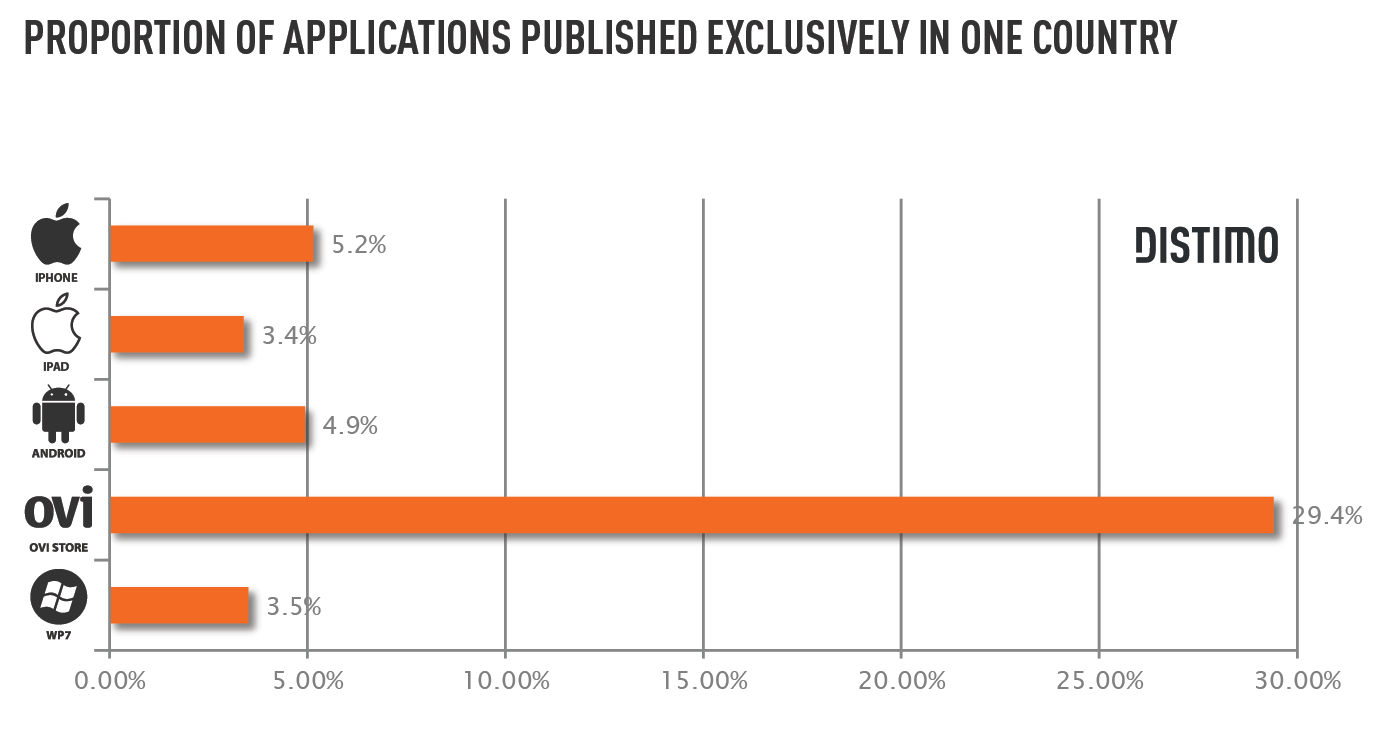
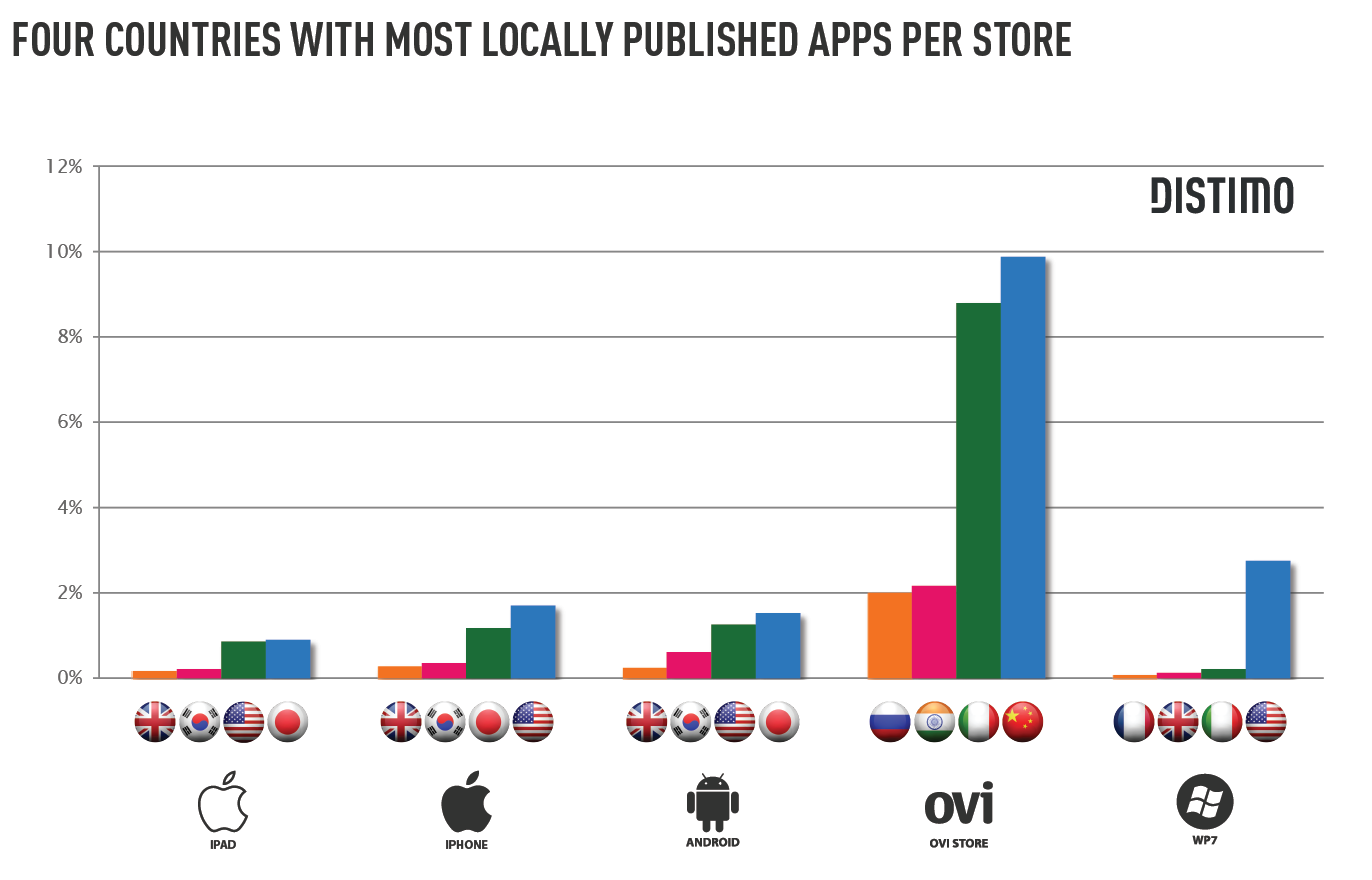
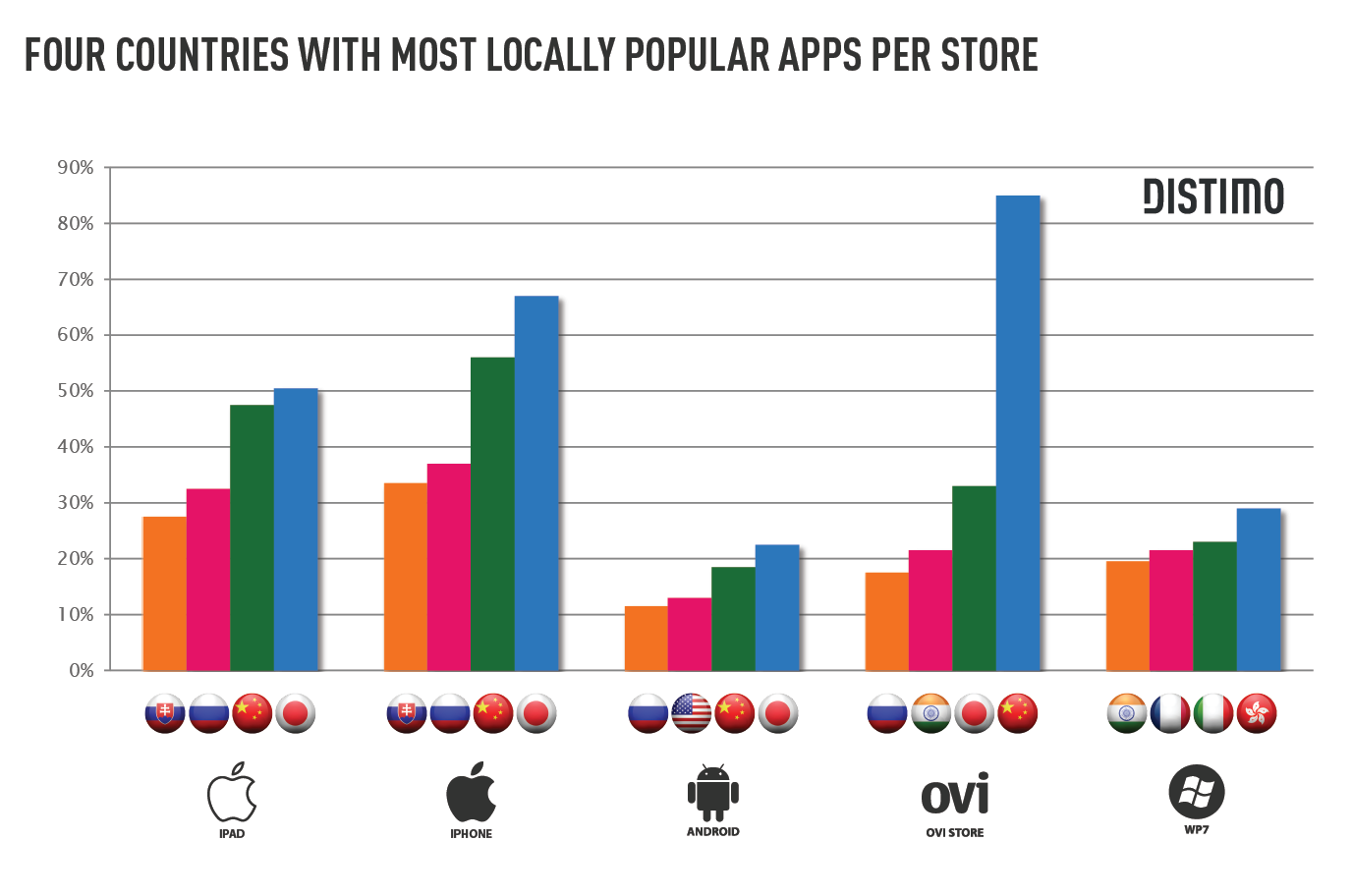
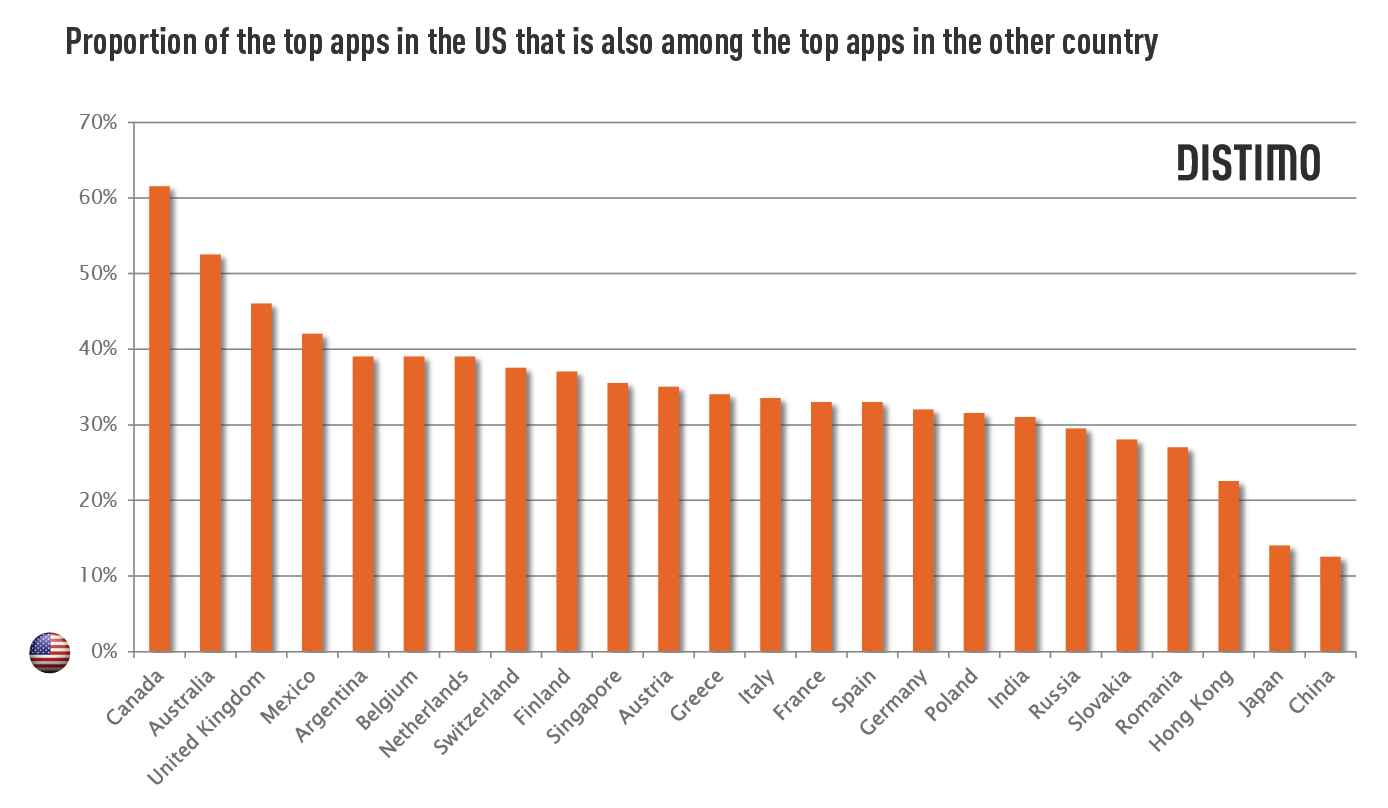
| Distimo’s Latest Report Reveals Mobile App Localization Trends Posted: 27 Sep 2011 09:09 AM PDT  The latest report from mobile analytics firm Distimo examines in detail the trends surrounding the localization of mobile applications. That is, which app stores tend to have a higher or lower number of apps that are published in just one country alone. According to its findings, globally, 27% of the most popular applications are popular exclusively in one country in Apple’s App Store for iPhone. Meanwhile, Nokia’s Ovi Store has the highest proportion of apps published in just one country (29.4%) while the App Store for iPad has the lowest (3.4%). Aside from the Nokia Ovi Store (29.4%), only a small proportion of apps are tailored to one specific country in the other vendors’ apps stores, including iPhone (5.2%), iPad (3.4%), Android (4.9%) and Windows Phone (3.5%). Distimo ignored RIM in this report, it should be noted. The majority of the locally published applications in the Nokia Ovi Store target either China or Italy. Two large publishers accounting for nearly 9% of the Ovi catalog in Italy are responsible for this country’s appearance here: “3″ and “Dada.” Combined, they publish over 8,000 apps in Italy, primarily ringtones and wallpapers. China is more affected by publishing restrictions, says Distimo. In China, games can only be published to the Ovi Store through licensed aggregators KongZhong and Tom Online. Videos can only go through CNR. Together, the three account for 5,845 apps in China’s Nokia Ovi Store. Elsewhere, the U.S. and the U.K. feature the most locally published apps, with the U.S. having 7,158 apps that are exclusive to the iPhone App Store in the U.S. When the App Store (iPhone and iPad) and Google’s Android Market are combined, the U.S., U.K., South Korea and Japan are about equal in terms of locally available apps. Despite the high number of locally published apps in the iTunes App Store for iPhone and iPad in the U.S., the proportion of local apps is relatively low, says Distimo. 22% of the 100 most popular iPhone apps and 19% of 100 most popular iPad apps are U.S.-only apps, it found. China and Japan have the most locally popular apps, the firm reports, and, as a general trend, local apps are very popular in all the mobile marketplaces worldwide. Distimo also examined the overlap of the top applications in the U.S. iTunes App Store, finding that top apps here tend to be popular in other English-speaking countries, but have the lowest overlap with Japan and China. Other countries seeing overlap include Mexico and Argentina (overlap 60%), Belgium, The Netherlands and France (51%), and Germany, Austria and Switzerland (57%). China and Singapore have an average overlap of 25%, which is low, but higher than the overlap between China and other countries (average 16%). The report then further breaks down the top paid and free apps in all the tracked app stores, both in the U.S. and worldwide. You can read more in the report, available here on Distimo’s website. We know app stores. Distimo was founded to solve the challenges created by a widely fragmented app store marketplace filled with equally fragmented information and statistics. Distimo was launched shortly after the introduction of the first app store. App stores have clearly shown since that time that they are the way forward for content distribution. The app store model offers an enormous opportunity for developers to get their content out and dramatically improves content discovery by consumers. However, the mobile market...
|
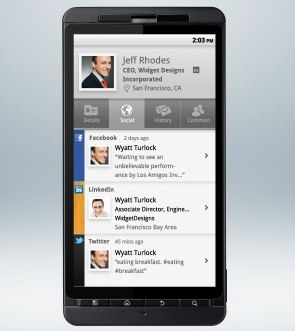
| Xobni Rebrands Its Product Smartr, Launches Contact Manager For Android And Gmail Posted: 27 Sep 2011 09:00 AM PDT  Xobni always was a clever name (it’s Inbox backwards), but perhaps it was too clever. Today, the startup that tries to make your email smarter is rebranding its newer products Smartr and launching them out of private beta for Android and Gmail. These products have been in private beta for several months. The Gmail add-on shows you contextual information about whoever is sending you an email culled from various social networks (Facebook, Twitter, LinkedIn) and company databases. It also shows you your relationship history with that contact, a list of pervious email conversations and related contacts, as well as contact search. The Android app takes over your address book on your phone and delivers similar functionality. It ranks contacts by importance and how often you communicate with them instead of alphabetically. Since it is all managed in the cloud, it can handle thousands of contacts. Different tabs show you contact details, that contact’s recent social feeds, your relationship history, and other contacts you share in common. A Smartr iPhone app is also in the works. If you buy a Xobni Pro account, you can sync your contacts across Gmail and your mobile devices. Xobni, the word “inbox” spelled backwards, has created a new way to look at your email. Xobni takes the effort out of organizing, searching, and navigating your email. The only thing that has changed with email in the last ten years is that everyone gets more of it. Email is overflowing with information. It’s hard to find what you need. It’s hard to know what you have. Xobni creates an information profile for each person you...
|
| Sprint’s 4G LTE Network To Go Live Early Next Year? Posted: 27 Sep 2011 08:40 AM PDT  Sprint is clearly in a tough spot. It’s been a step behind in getting the iPhone which should be remedied soon, but the yellow carrier is also facing a mega-merger between AT&T and T-Mobile that would drop it way below the competition. The good news, however, is that it looks like Sprint has a plan, a piece of which involves the deployment of its 4G LTE network in early 2012. According to sources familiar with the matter who spoke with CNET, LTE equipment is already going up and workers are field testing as I write. The target launch date is either the first or second quarter of 2012, but it may go live earlier. While the new improved network won’t require any additional capital investment, it will cost between $4 and $5 billion over the next three to five years. But apparently Sprint’s plan will actually save around $10 to $11 billion over the next seven years. The carrier expects to shut down its iDEN network (for Nextel) by 2013 while installing equipment that can run both its 3G CDMA network and its forthcoming 4G LTE network. The 4G LTE network is based on the same LTE variant as Verizon’s network: FD-LTE. In the midst of all this AT&T/T-Mobile fun, Sprint has rallied to fight the possible duopoly, painting itself (who cares how sincerely) as the American underdog. Psychologically, this has surely made Sprint customers more loyal, and lured competitors’ customers into at least considering a switch based on principle. What holds people back is the fact that first, Sprint doesn’t have the iPhone (sorry Android fans, but it’s true), and second that its network just isn’t quite as developed as Verizon or AT&T’s. With the roll-out of a strong 4G network, the launch of the iPhone, and the reported confirmation of unchanging unlimited data, Sprint may just pull off an Appalachian St. vs. Michigan-style upset. And this is what it will look like: Sprint Nextel offers a comprehensive range of wireless and wireline communications services bringing the freedom of mobility to consumers, businesses and government users. Sprint Nextel is widely recognized for developing, engineering and deploying innovative technologies, including two wireless networks serving almost 49 million customers at the end of the second quarter of 2009; industry-leading mobile data services; instant national and international push-to-talk capabilities; and a global Tier 1 Internet backbone.
|
| Rexly Takes Its Social Music App To The iPhone Posted: 27 Sep 2011 08:05 AM PDT  When social music startup Rexly launched at Disrupt NYC last May, we called it the social music discovery app that Ping should have been. It shows you what your friends are listening to on iTunes, but filters the stream in an attempt to surface the best stuff. Up until now, you had to log into Rexly’s site to experience it. But today it is releasing its iPhone app, Music With Friends, which takes over your iPod player and incorporates all sorts of social features. As you listen to the songs and playlists on your iPhone, Rexly scrobbles them and they show up in a feed that your friends can see. Similarly, you can see a feed of all the songs your friends are listening to who use Rexly, or the most popular songs overall. But instead of just spitting out an unfiltered stream of the ost recent songs in your feed (although you can see that too), the default filter is Rexly’s “magic” stream. It shows you songs from friends or other people you are following you’ve designated as super trustworthy in regards to their musical taste. The ability to tell the app which people you “Supertrust” is a way to get around the problem we already see in Facebook since the recent launch of music-sharing apps and its Ticker, which is overflowing with all of your friends bad Spotify music choices. (Facebook addresses this issue with its own Music Dashboard). Just because they are your friends, does not mean they have good taste in music. Rexly lets you pick which of the people you follow you trust, and highlights their listening stream. For every song in your stream, you can listen to a 30-second sample, give it a thumbs up or a thumbs down (which further trains Rexly’s algorithm) or leave a comment. You can also share the song on Twitter or Facebook. Ping, which launched with no social sharing features outside of iTunes, now only lets you share on Twitter. Until Apple and Facebook resolve their differences, Rexly is positioning itself as a bridge between the two. Rexly’s biggest drawback, however, is the 30-second sample. It really isn’t competing against iTune’s native Ping feature more than it is against all of the new social music apps on Facebook (Spotify, MOG, Rdio, etc.). They allow you to listen to the full song when a friend shares it (at least for anyone who is a subscriber to one of the services—and even if you are not, Spotify is giving away free 6 month trials). But that is more an obstacle set up by the music industry than Rexly. If all of these new music sharing apps actually result in more sales for the labels, they might finally take down that barrier. And Rexly plans to add your friends’ activities on Pandora, Spotify, Rdio and other music streaming services so it will be able to piggyback on their efforts as well. Rexly’s singular goal is to make their users happy, by connecting them with the music that moves them the most. Rexly strives to rock musical worlds by collecting the most meaningful data and applying the most powerful recommendation techniques, in an environment that respects privacy and reveres individuality. Over time, Rexly will add new data sources and experiment with new recommendation techniques, all in the name of providing their users with the information you need to know what music...
|
| Professional Content Sharing Platform SlideShare Goes Mobile With New HTML5 Site Posted: 27 Sep 2011 07:59 AM PDT  Pandora, LinkedIn, Box.net and many others are moving to HTML5 to give users a cross-platform, rich media experience. The latest to participate in this tend is SlideShare, a sharing platform for business documents, videos and presentations. SlideShare lets anyone share presentations and video and also serves as a social discovery platform for users to find relevant content and connect with other members who share similar interests. The company also has a huge enterprise following, and companies like IBM and others use the platform to curate content from all of their employees and partners on a branded page. Considering the trend towards content discovery on mobile platforms, it would make sense for SlideShare to have mobile offerings. But the startup has not offered any native apps and until today had a flash-based site that could be reached via the browser. Co-founder Jonathan Boutelle tells us that using the Flash-based site was a barrier for users accessing SlideShare from iOS sites. And when determining whether to build a native app for go HTML5, Boutelle said that building a mobile optimized site made the most sense because of the cross-platform capabilities to work on iPads, iPhones and Android devices. The new HTML5 SlideShare site now renders 30 percent faster and users can view, share, and interact with presentations. Boutelle says the latest version of the SlideShare site uses a patent-pending document conversion technology that renders all the details of a PowerPoint or Word document using nothing but HTML5. The site also allows visitors to take advantage several features that were previously available only on the desktop version of the site including the ability to copy and paste text; keyboard navigation; full-screen view; and the ability to view embedded documents. Registered users can also view private content, to view content from friends, and favorite content. Any user viewing a slide view page now has visibility into metadata such as the number of views, embeds, and favorites for each presentation, as well as related content and content by the same author. And the homepage now displays a list of featured presentations. Boutelle says SlideShare continues to see growing engagement, and expects the HTML5 platform to increase usage as well. He explains that HTML5 made sense because the company wanted a lightweight experience for users and wanted documents, fonts, and more to look the same on various browser types. As we mentioned above, this is SlideShare’s first mobile presence and currently the startup doesn’t have any plans to expand to native apps. “We’re doubling down on HTML5 and making this better and bette so it works for everybody,” says Boutelle. Currently, the site's 60 million users upload tens of thousands professional presentations every day. SlideShare has raised $3 million in funding from Jonathan Abrams, Mark Cuban, Dave McClure, and Venrock.
SlideShare is a community for sharing presentations. Individuals or organizations can upload and share PowerPoint, PDF, or OpenOffice presentations. Anyone can find presentations on their topic of interest. Users can tag presentation, and download or embed them into their own websites or blogs. Users can also share their documents privately. SlideShare lets its users to join groups to connect with SlideShare members who share similar interests. Business presentations make the most of...
|
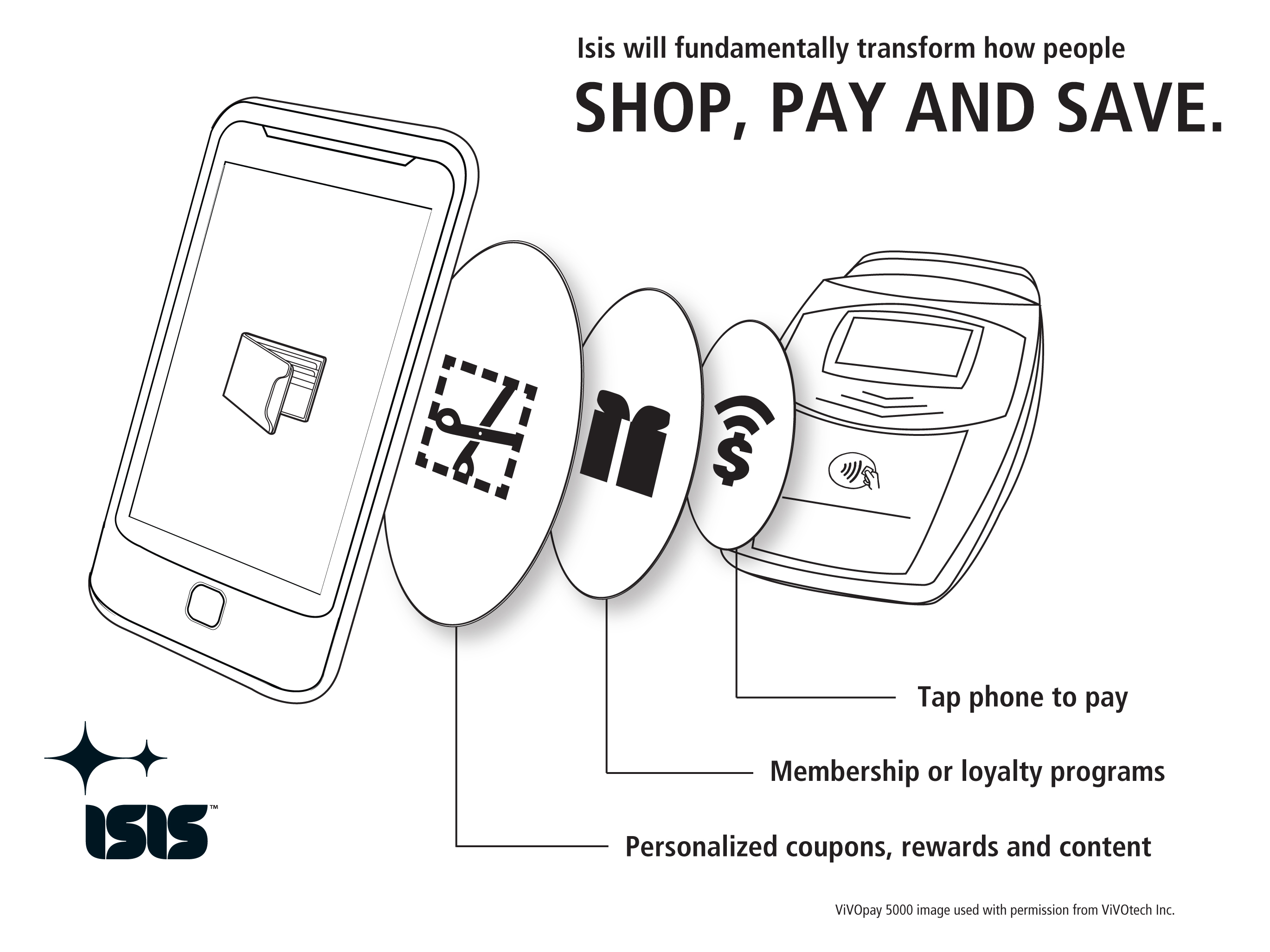
| Leading Mobile Device Makers Pledge Support For Carrier-Led NFC Venture Isis Posted: 27 Sep 2011 07:57 AM PDT  Isis, the carrier-led joint venture between AT&T, T-Mobile and Verizon, is today announcing support for its mobile wallet system from the majority of leading device makers, including HTC, LG, Motorola, RIM, Samsung and Sony Ericsson, as well as from NFC hardware provider Device Fidelity. All of the handset makers are now committed to introducing handsets that will include Isis’ NFC and related technology standards. Isis represents the carriers’ attempt at inserting themselves into the mobile wallet and mobile payments space in order to compete head on with other mobile wallet providers, including those from credit card companies, banks and platform providers, like Google with its Google Wallet program for Android handsets. The technology in Isis’ mobile wallet uses NFC, or “near field communication,” which enables short-range wireless transactions at point-of-sale. Instead of swiping a credit card, consumers will be able to simply tap or wave their phone at the payment terminal at checkout in order to complete a transaction, and in some cases, even receive coupons or offers from the merchant. NFC forecasts vary, with ABI Research estimating 35 million handsets shipped this year, and double that next year. IHS iSuppli has forecasted nearly 550 million handsets by 2015. Meanwhile, Berg Insight AB expects there to be 400 million by 2015. Whatever the true number may be, the consensus is that the technology is years out from consumer adoption. However, the launch of the Apple iPhone 5 is right around the corner, and it will be a key turning point for NFC’s future, potentially shaking up those analyst estimates. If the iPhone 5 does not include NFC support, then adoption of NFC will lag. If it does offer NFC, the movement will continue its current forward momentum, and likely at a faster pace. Today’s news from Isis supports the latter theory, given its seemingly reactionary nature. If Apple is moving forward with NFC, competing handset makers would have no choice but to also participate by offering NFC support in their handsets as well. That support doesn’t necessarily have to include a partnership with Isis, of course, but Isis is one of the leading movements in the space. As for DeviceFidelty, it’s no surprise to see it also officially named as one of the companies powering the Isis mobile wallet, given its position as a leader in contactless technologies, including NFC. It’s also interesting to hear this news now, when just yesterday, disruptive mobile payments company Square’s COO Keith Rabois boldly declared NFC as having no value, citing lack of merchant interest in the technology. The “merchant adoption” hurdle is valid, of course, but contactless infrastructure is already in more locations than consumers may realize, even if it’s somewhat underused. As of this spring, for example, MasterCard claimed it had approximately 88 million PayPass cards (contactless credit cards) and devices in use at 276,000 merchant locations, plus trials and rollouts underway in 36 countries, including at fast food restaurants like McDonald’s, KFC and Taco Bell, plus retailers like Sports Authority, Best Buy, and gas stations like BP and Hess. Visa offers a similar contactless support through payWave, with over 150,000 merchant locations in the U.S. and over 300,000 locations worldwide. Contactless infrastructure is an important part to NFC’s adoption because NFC is based on the existing contactless infrastructure around the world. In other words, where there’s contactless support, there can be support for NFC too. This is, of course, assuming that the device in question offers “card emulation” mode, which lets the NFC device behave like an existing contactless card. But that’s the most logical onramp in the contactless to NFC transition, so that will likely be the case with most mobile wallet initiatives. Correction: The article originally referred to Visa’s service as “In2Pay,” but that’s its smartphone case that brings NFC to iPhone. Visa’s NFC payment technology is “Visa payWave.” Visa also provided some numbers regarding the service, which were added.
|
| Huawei Taps Discovery Channel To Build Discovery Expedition Rugged Handset Posted: 27 Sep 2011 07:38 AM PDT  Huawei has a history of partnering up with brands to build highly targeted phones, a good example being the Red Bull-branded RBM HD rugged phone (otherwise known as the Impulse for AT&T). This time, the company is taking the less caffeine-fueled route, opting for some added credibility with its next rugged handset: the Huawei-Discovery Expedition phone. Built in conjunction with the Discovery Channel’s lifestyle brand, the Huawei-Discovery Expedition phone is built for the woodsman, indeed. It can stand up against water, dust, and electrical shock, and comes with all the goodies you need to navigate in the wild. A compass, torch, GPS, and a G-sensor are all included. Of course, just because you’re becoming one with mother nature doesn’t mean you don’t want to tweet about it, which is why Facebook and Twitter are also pre-loaded. We were thinking we’d see a camera, even a low-end one, on this handset as its owners are meant to be surrounded by nature’s beauty. But perhaps the lack of camera will be reflected in a low price. Huawei says the Discovery Expedition phone will be available during the fourth quarter of this year, though specific carriers, retailers and pricing was not included. Company: Huawei Huawei is a leading telecom solutions provider. Through continuous customer-centric innovation, they have established end-to-end advantages in Telecom Network Infrastructure, Application & Software, Professional Services and Devices. With comprehensive strengths in wireline, wireless and IP technologies, Huawei has gained a leading position in the All-IP convergence age. Their products and solutions have been deployed in over 100 countries and have served 45 of the world’s top 50 telecom operators, as well as one third of the world’s population. ...
|
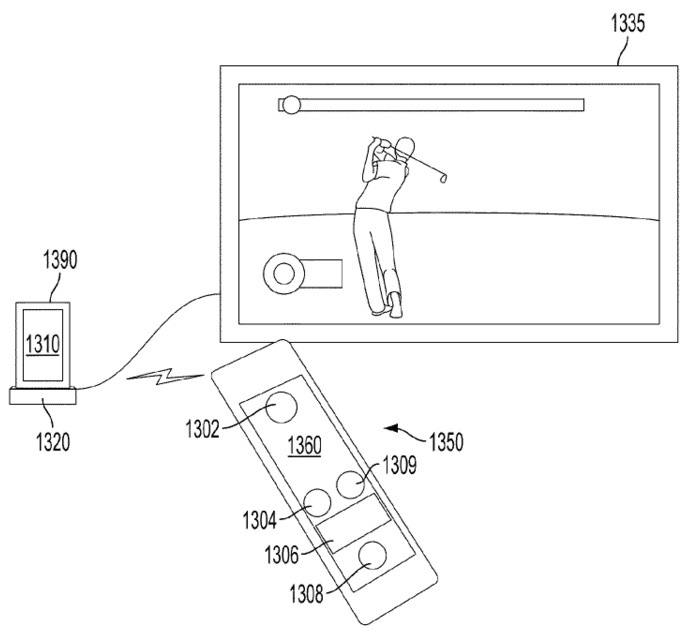
| Microsoft Files More Patents For Dual-Screen Swiss Army Knife Slider Phone Posted: 27 Sep 2011 07:30 AM PDT 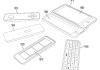 I could swear that I’ve had a dream about this before, or at least written about it*, but it looks like Microsoft beat me to the patent office. On September 22, Microsoft filed the “Mobile Communication Device Having Multiple, Interchangeable Second Devices” patent, which basically describes a slider-style phone that has replacement components to swap in for the slider keyboard. What’s cool is that the mobile phone should be able to communicate with any of the secondary devices, whether they’re docked in the phone’s little slide-out drawer or not. Within the picture, you can see a QWERTY keyboard, an Xperia Play-style gaming controller, an extra battery, and an alternate screen. Though they aren’t included in the drawings, Microsoft also included “expansion storage devices, solar panels for charging a battery of the first device, or for directly powering the first device, or medical sensors (surface thermometers etc.)” The patent goes on to say that “the game controller and keyboard can each comprise a speaker and a microphone to enable mobile phone handset operation. The first device can simultaneously communicate with one or more of the multiple second devices.” In other words, Microsoft wants to make your phone a Swiss army knife. And the possible implementations of this are pretty far reaching. The game controller is an obvious choice — throw a kickstand on the phone and you have yourself a nice little portable gaming station. And with the Xbox Live integration baked into Windows Phone Mango, it’ll definitely be worthwhile. But something as simple as an extra battery (or possibly solar panels) can make a huge difference in the way we use our devices. Granted, lots of phones allow for interchangeable batteries, but none let you pop ‘em in to the slider dock. Most of the time you’re trying to get into that back panel while you’re on the go, and the process becomes super tedious. So much so that you, like myself, may actually use the phone less just to avoid it. This technology has the potential to make one of the bigger problems in the mobile world (battery life) a little less difficult. Of course, Microsoft and others apply for patents all the time, and many of them sit untouched in a vault unless some competitor brings the technology/design to market. However, I’ve been keeping up with some of the latest Microsoft patents and it’s become clear that this detachable dual-screen slider dream is obviously a focus over at Redmond. We’ve already heard about a patent that improves the design of a slider phone to make the keyboard and screen sit evenly. But past that, Microsoft also filed a patent* in July that again describes a mobile phone with a detachable second screen, wherein both components can communicate with each other, detached or not. In fact, some of the same drawings are duplicated within that patent and this most recent one (like the image displayed on the right). This obviously isn’t proof of anything, but it’s surely a sign that Microsoft is thinking long and hard about this idea. [via Joystiq] Microsoft, founded in 1975 by Bill Gates and Paul Allen, is a veteran software company, best known for its Microsoft Windows operating system and the Microsoft Office suite of productivity software. Starting in 1980 Microsoft formed a partnership with IBM allowing Microsoft to sell its software package with the computers IBM manufactured. Microsoft is widely used by professionals worldwide and largely dominates the American corporate market. Additionally, the company has ventured into hardware with consumer products such as the Zune and...
|
| Windows Phone Marketplace Is Now Available In A Browser Near You Posted: 27 Sep 2011 06:37 AM PDT  All the way back in May, Microsoft revealed that they were hard at work developing a web version of the Windows Phone marketplace. Now that the new Mango update is nearly upon us, Microsoft has officially flipped the switch on their web marketplace for markets across the world. In true Windows Phone style, the marketplace’s web version sticks closely to Metro UI’s slick, minimalist design roots. Back in the May reveal, Microsoft hinted at “extra visibility [and] more merchandising possibilities” for developers and their applications, and they’ve delivered on their promise with a rotating slideshow of standout apps. Cosmetics aside, all the expected functionality is all accounted for here: potential customers can sort through the myriad apps at their disposal by category or genre, and each app’s entry provides screenshots and user reviews for the discerning customer. A good portion of Windows Phone apps allow you to try them before actually making the purchase, and playing with a demo version on your phone only takes one click from inside your browser. Purchasing an app is similarly a one-click affair, since it automatically charges the credit card tied into the user’s Windows Live ID. Once an app has been paid for, it downloads over-the-air to the user’s Windows Phone. Simple enough, right? The Marketplace is now accessible through Microsoft’s Windows Phone portal, but users may want to be careful: sometimes the temptation to spend hours poking through app lists is too strong to overcome.
|
| You are subscribed to email updates from TechCrunch » Mobile To stop receiving these emails, you may unsubscribe now. | Email delivery powered by Google |
| Google Inc., 20 West Kinzie, Chicago IL USA 60610 | |