MobileCrunch |  |

- Sony Ericsson CEO: We Should Have Taken The iPhone More Seriously
- Mobeam Raises $4.9M For Light-Based Communications Technology
- PayPal On Barriers To Google Wallet: Mass Adoption Of NFC Is Years Away
- Amazon “Punches Apple Hard” With Kindle Fire’s $199 Price
| Sony Ericsson CEO: We Should Have Taken The iPhone More Seriously Posted: 03 Oct 2011 03:59 AM PDT  In an interview with the Wall Street Journal, Sony Ericsson President and CEO Bert Nordberg made a number of interesting statements about the iPhone, Android, Windows Phone and Motorola. Defending the decision to pick Android as the choice operating system for its mobile handsets, Nordberg posits that it was ‘the best choice they could have made’ considering its rapid growth, but also acknowledges that the company “should have taken the iPhone more seriously when it arrived in 2007″. Asked whether he would have liked to buy Motorola Mobility rather than Google, he candidly responds:
Nordberg says the goal is for Sony Ericsson to gradually shed its feature phone business and become a 100% smartphone company – much unlike Nokia, I should note. He estimates that to happen in the middle of next year (70% of its sales already stem from smartphones today). Asked why Sony Ericsson hasn’t become the world’s largest maker of Android devices yet, Nordberg tells the WSJ that they’ve underestimated the speed with which it could penetrate the United States, where he acknowledges the company to be a “very tiny player”. Sony Ericsson has an estimated 11 percent share of the total Android market. Asked whether the company would consider switching to Microsoft’s Windows Phone platform, Nordberg says (emphasis ours):
Company: Sony Ericsson Website: sonyericsson.com Sony Ericsson Mobile Communications is a global provider of mobile multimedia devices, including feature-rich phones, accessories and PC cards. The products combine powerful technology with innovative applications for mobile imaging, music, communications and entertainment. The net result is that Sony Ericsson is an enticing brand that creates compelling business opportunities for mobile operators and desirable, fun products for end users. Sony Ericsson Mobile Communications was established in 2001 by telecommunications leader Ericsson and consumer electronics powerhouse Sony Corporation. The company...
|
| Mobeam Raises $4.9M For Light-Based Communications Technology Posted: 03 Oct 2011 02:46 AM PDT  Mobeam this morning announced that it has raised $4.9 million in a Series A round of funding from Samsung Ventures, Mitsui, yet2Ventures and other unnamed investors. The company has developed technology that enables mobile phones to interact with laser scanners used at retail and point-of-sale locations worldwide. Mobeam says it will use the capital to establish its patented light-based communications technology as a new industry standard, and work with consumer and retail brands to develop and launch mobile couponing, ticketing and other mobile commerce initiatives. Mobeam says traditional laser scanners used in major retail locations all around the world are unable to communicate with mobile devices adequately, due to the way handset screens are currently constructed. The company’s technology basically enables retailers to ‘mobeam’ a barcode displayed on a mobile phone or tablet accurately, using their current laser scanners. Mobeam's patented light-based communication technology utilizes LED tech to transform barcodes into a beam of light that every laser scanner can read. The technology can also simultaneously display 2D images and initiate NFC transmission, making it possible for retailers, brands and device manufacturers to develop mobile commerce strategies using existing infrastructures and technology. Founded in 2010 as a spin-off from its parent company Ecrio, Mobeam is headquartered in Cupertino, California.
|
| PayPal On Barriers To Google Wallet: Mass Adoption Of NFC Is Years Away Posted: 02 Oct 2011 01:45 PM PDT 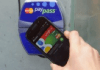 As you may have read, Google officially launched its mobile payments platform Google Wallet recently, which allows you to pay for products in the real world by tapping your NFC-enabled Android phone against a compatible card reader. Shortly following the initial announcement of the technology in May, payments giant PayPal went on the offensive, filing a lawsuit against Google and two former PayPal executives who now are in charge of mobile payments at Google. Allegations of "misappropriation of trade secrets, and "breach of fiduciary duty" were thrown out against these individuals. Clearly, it’s messy. While the lawsuit itself spoke volumes about PayPal’s view on Google Wallet, the eBay-owned company has not really commented on Google Wallet over the past few months. Until now. We sat down with PayPal’s director of communications, Anuj Nayar, who candidly gave me the company’s opinions on Google Wallet and NFC technologies. We know that eBay and PayPal have a somewhat interesting view on NFC technology. In a recent earnings call, eBay CEO John jokingly said merchants refer NFC “not for commerce.” But PayPal has dipped its toes in the NFC pool with support for Android, which Nayar explains as ‘keeping an eye’ on the technology. Nayar says that one advantage he sees with PayPal’s payments platform vs. Google Wallet is that “we’re not asking anyone to do anything different.” He points to the fact that in order to use NFC right now, many consumers would have to change phones to the NFC-enabled Nexus S. “There simply aren’t that many NFC enabled phones out there and we don’t see NFC as something that will happen very quickly,” he explains. Another challenge to the adoption Google Wallet’s platform and NFC, says Nayar, is trying to get merchants to change their behavior. As my colleague Greg Kumparak wrote in his review of Google Wallet, merchant adoption is still limited. Nayar says that mass adoption of NFC is still at least three years away but even then, the technology will not replace mobile payments all together. Of course, he explains that PayPal is watching the NFC space closely (by launching their own integrations), but the sense is that the company isn’t heavily investing in the technology because of some of these barriers to adoption. An area where PayPal is investing in is a comprehensive solution for in-store merchants to integrate PayPal into the checkout experience. Later this year, PayPal will be rolling out a one-stop shop for merchants, both online and local businesses, to manage payments from customers. Details are sparse but PayPal says that new features will include location-based offers, making payments accessible from any device and offering more payments flexibility to customers after they've checked out. And soon, you'll also be able to use PayPal in physical payments gateways at stores as well (where you would normally complete the credit card swiping process), and will have the ability to access realtime store inventory, receive in-store offers, and real-time location-based advertising from stores. The company is expected to announce a number of in-store partnerships with large retailers in the near future. Nayar says that PayPal’s solution is more complete for merchants, and is capitalizing on a huge factor in the end-to-end shopping experience—data. He explains that relevant data and personalization will play a big role in the new payments experience, so that PayPal’s 100 million-plus users will be able to see more relevant offers and experiences and merchants will be able to target customers. PayPal isn’t the first payments company to go on the offensive against NFC. Keith Rabois, COO of mobile payments company Square, said last week at GigaOm’s Mobilize conference that NFC “has no value proposition for consumers and merchants.” Still it’s hard to ignore the fact that Google, as well as other mobile tech companies like HTC, LG, Motorola, RIM, Samsung and Sony Ericsson, are making major investments in NFC. Even credit card companies are making bets on NFC as well. And MasterCard, who is a partner in Google Wallet, has said that NFC is a “five-to-ten year effort.” As my colleague Sarah Perez points out, the merchant adoption hurdle to NFC is valid, but contactless infrastructure is already in more locations than consumers may realize, even if it's somewhat underused. While there’s no crystal ball to tell us whether NFC will be around in a few years or ten years, clearly PayPal isn’t making a huge bet on the technology and is investing in other in-store technologies. However, even if NFC is years away from mass adoption, Google is gambling that being early to the game will help the company dominate the mobile payments market in the future. It will be surely be interesting to see whose foresight pays off in five years. And in case you were wondering, Nayar says there are no updates to the status of that PayPal v. Google lawsuit.
|
| Amazon “Punches Apple Hard” With Kindle Fire’s $199 Price Posted: 02 Oct 2011 09:46 AM PDT  With the Kindle Fire, Amazon is making its first foray into tablet computers, a market where Apple dominates with its iPad and nothing else has even made a dent. The Android-based Kindle Fire is an impressive media tablet, and Jeff Bezos understands that the device itself is only part of the equation. It is merely the front-end of a set of end-to-end services which will deliver digital media from Amazon’s servers to people’s hands. But the Kindle Fire is no iPad, and Bezos knows that too. So he is using something else to differentiate the Fire from the iPad: price. The $199 price of the fire surprised almost everyone. It is $300 lower than the cheapest iPad 2. So even if it is not as fully featured, doesn’t work as smoothly and will launch with a laughably small number of apps (less than 1 percent of the number of apps available on the iPad, which is currently over 100,000), all of that may not matter. Because if it is good enough, millions of people will decide to buy it for $199 instead of spending $499 for an iPad. One of Amazon’s advantages as a retailer with scale has always been price. And it is using it effectively with the Kindle Fire, which is already the second-best selling Kindle on Amazon (the first is the new $79 Kindle). There is a reason the Kindle Fire is not launching with 3G service, and only WiFi. Amazon had to do everything to get it down to that $199 price point. Bezos knows he can’t take on Apple head on. Instead, he is doing everything he can to carve out a new space in the tablet market for Amazon, and price is a big part of it. In a letter to customers that is currently on the homepage of Amazon, he “punches Apple hard,” in the words of investor John Borthwick. The letter starts:
Bezos made the same point during the launch announcement of the new Kindle line last week. “We are building premium products at non-premium prices,” he said. Apple, of course, builds premium products at premium prices. Will it have to respond by lowering the price of the iPad even lower, or can it stick to the high road? Follow @Borthwick@Borthwick John Borthwick Amazon punches Apple hard in advance of nxt week. There are two kinds of companies … bit.ly/pHel4B
|
| You are subscribed to email updates from TechCrunch » Mobile To stop receiving these emails, you may unsubscribe now. | Email delivery powered by Google |
| Google Inc., 20 West Kinzie, Chicago IL USA 60610 | |


