MobileCrunch |  |

- Fund.me: Mobile Social Network Startup Just.me Raises $2.7 Million
- Does Microsoft Really Need A Windows Superphone?
- Verizon Customers Dealing With Third Data Outage In One Month
- Genius: New App Wakes You Up Earlier If It Snowed Last Night
- LG Prada 3.0 Makes Official Debut In Korea, Europe To Follow
- iPhone App Downloads In November Up 83% Over Last Year
- Call Genie Acquires Mobile Advertising, Analytics Startup VoodooVox
| Fund.me: Mobile Social Network Startup Just.me Raises $2.7 Million Posted: 29 Dec 2011 04:56 AM PST  Just.me, a stealth startup incubated by Palo Alto, California-based Archimedes Labs has raised $2.7 million in Series A funding according to an SEC filing. The company earlier secured $600,000 in seed financing from SV Angel, Google Ventures, True Ventures, Betaworks and a couple of other high-profile angel investors such as Don Dodge, Michael Parekh and TechCrunch founder Michael Arrington. I reached out to Keith Teare, CEO and sole founder of just.me (and also technically also a co-founder of TechCrunch, for full disclosure), but he politely declined to comment on the funding round. Sources close to the company, however, were kind enough to inform us that the Series A round was led by a new investor, namely Khosla Ventures, and that True Ventures also participated again. Teare tells me he’ll have more to share about the company’s vision when just.me gears up for public launch, which should occur in March 2012. From what I’ve gathered so far, the company is building a ‘new type of social network’ that lives on your smartphone and the cloud and can be accessed from your desktop browser, rather than the other way around (e.g. what Facebook does). Basically, it sounds like just.me wants to turn your phone into the post-PC centerpiece of your social graph, and not just a tool to gain access to it. More once we learn more.
|
| Does Microsoft Really Need A Windows Superphone? Posted: 28 Dec 2011 12:10 PM PST 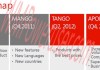 A leaked Windows Phone roadmap made the rounds earlier today, and if its contents hold true, then Microsoft will be going big on hardware when it comes time for Windows Phone Apollo to take the stage. Even though the budget-friendly Tango update will hit devices first, Microsoft has apparently made the development of “superphones” a priority for next year. One of the things that I really enjoy about Windows Phone is that it doesn’t need the latest-and-greatest hardware in order to give users a consistently smooth experience. Take devices like the Focus Flash for example — AT&T will give you one for something like a penny these days, and I’d say the device runs about as well as any other Windows Phone on the market. That’s a good thing — creating a sense of consistency across devices at all price points means that nearly every user has the same (hopefully solid) experience. By the same token, it also creates a problem of differentiation. When the experience of using the OS is very close across different devices, hardware manufacturers have to find ways to make their handset the one to buy. Whether that’s by going with a big display or a physical keyboard is up to the vendors to decide, but Microsoft’s supposed push for “superphones” with the Apollo update may mean that Microsoft will try and face Android on their own terms. That’s where Microsoft falls into a trap, and I can’t really blame them. Companies like Samsung and Motorola have taken their OS of choice and have thrown it on devices for every potential market they can think of. Meanwhile, blogs and pundits like to wax technical everytime a new spec sheet is released, which creates a sense of unwarranted hype around numbers and clock speeds and megapixels. The end result is an environment that’s overloaded with options, with only the best performing ones receiving any limelight. That’s not to say a device’s specs aren’t important. In fact, they’re absolutely important to the extent that they help deliver a great user experience. After a while though, the law of diminishing returns kicks in — adding a slightly faster processor makes a device look better on paper, but actual performance gains could be negligible. But Windows Phone has arguably made it to that point already. Sure, it could stand a few tweaks, but I don’t think what Windows Phone needs can be addressed by new hardware. Not yet. anyway. The limiting factor is the OS itself. It runs very well even on first-generation hardware, so would beefing up components make that much of a difference? The concept of a superphone, with whatever specifics that may entail, hinges on the notion that it can deliver more than what a run-of-the-mill device is capable of. Dual-core processors and LTE radios would be welcome additions to the platform’s hardware lineup, and I’m sure they’ll appear in Windows Phones soon anyway, but hardware additions at best will only lead to feature parity with the competition. It all comes down to how big a step forward the Apollo update is. It was long rumored that the “Apollo” codename referred to Windows Phone 8, and it’s apparent ship date in Q4 2012 means that a lot could happen between now and then. If some drastic changes take place, then the superphone concept may be better able to deliver a WP8 experience than current hardware. But will it be enough to solidify their presence in the market? If the road map is legit (and hasn’t been made irrelevant), then waiting until Q4 2012 for their first superphones hit the market could put them at a terrible disadvantage against Android’s quick updates and Apple’s end-of-the-year marketing power. It’s bound to be a pretty gruesome fight no matter what developments arise between now and then, and Microsoft had better hope that their approach pays off.
|
| Verizon Customers Dealing With Third Data Outage In One Month Posted: 28 Dec 2011 11:23 AM PST  It seems like December just can’t end soon enough for the folks at Verizon — we’re getting reports that Verizon’s data network is once again on the fritz. Like both other times this month, not everyone is affected, but I can safely say my little part of New Jersey is without data. Users on Verizon’s support forums have reported similar issues in parts of Georgia, Michigan, Oregon, Pennsylvania, California, Virginia, Washington, Texas, and Maryland. Interestingly, the outage only seems to be affecting 4G devices, as Droid-Life reports that 3G only handsets seem to work just fine. 4G handsets on the other hand can’t seem to pick up either 3G or 4G service, so hopefully you’re not using your Galaxy Nexus for anything too critical. Each outage becomes harder and harder to swallow, if only because Verizon has never revealed the cause of these issues. It’s especially frustrating because Verizon’s big 4G promotional push was intended to get as many customers up and running on their LTE network as soon as possible. They wanted to preserve the quality of service for customers with 3G-only devices, but I can’t help but wonder if Verizon’s plan was a bit too successful. I’ve reached out to Verizon for a comment, but haven’t heard anything yet at time of writing — we’ll keep you posted on the situation. Update: a Verizon Wireless spokesperson reached out with the following statement.
|
| Genius: New App Wakes You Up Earlier If It Snowed Last Night Posted: 28 Dec 2011 08:00 AM PST  This is smart: a new alarm clock application for the iPhone and Android wakes you earlier if it snowed last night. Called simply, “Winter Wake-Up,” the app lets you configure its settings to wake you up earlier than your scheduled alarm depending on weather conditions, with separate settings for both “Frost” and “Snow.” Credit where credit is due, I stumbled across the app not out of necessity (it’s 70 ° F here in Florida), but on the blog at Springwise, which likes to collect interesting things. Although I’ll never have need for the app, I do recall what’s it’s like to have snow and ice and the time it takes to dig the car out from underneath it all. This woud be a handy app to have on hand for those who live in chillier climates. There’s also an optional setting – a checkbox – which you can select that says “don’t bother to wake me if the weather’s too bad. I’ll work on Saturday.” (Or, as is more likely in today’s world, you’ll work from home that same day…just maybe a little later). The app, released this month, is the creation of the Belgian digital agency Boondoggle, and is available for both on iOS and Android, here on iTunes or here in the Android Market.
|
| LG Prada 3.0 Makes Official Debut In Korea, Europe To Follow Posted: 28 Dec 2011 07:24 AM PST 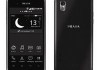 Tech-savvy fashionistas finally have a reason to rejoice with the official release of LG’s Prada 3.0 handset. Namely, it’s the first time a in a long while that the company’s fashion phones aren’t completely outclassed by the competition. When I say outclassed, I’m referring strictly to performance. With it’s 4.3-inch WVGA NOVA display, 1 GHz dual-core processor, and 8-megapixel camera, the Prada 3.0 is a solid little package, but one that’s a bit lacking considering its premium price tag. Specs, of course, aren’t the point here. The Prada 3.0 goes back to the strictly candybar form factor of its forebear, and despite design language similar to the Lumia 800, it’s a handsome (if understated device). What’s sort of curious about this whole thing is how exactly performance and style intersect with the Prada 3.0. Its spec sheet is above average, but many current-gen Android smartphones would likely run circles around it. Then again, will the Prada’s target market care? Doubtful — as long as it’s got that logo (and Prada’s Saffiano pattern) on the back, brand fiends with money to burn will eat it up. For a device that costs 899,900 won (or nearly $780), I’d prefer something with a bit more horsepower, but that’s just the cheap pragmatist in me talking. Despite being a niche product through and through, LG recently outed the Prada as one of the company’s first devices to receive the Ice Cream Sandwich update. It won’t be long before the Prada 3.0 starts its world tour — the device will hit Europe and the rest of Asia in January — but there’s no word yet on U.S. availability.
|
| iPhone App Downloads In November Up 83% Over Last Year Posted: 28 Dec 2011 07:09 AM PST 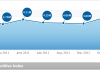 Marketing technology company Fiksu tracked the impact of the iPhone 4S on iPhone app downloads and found that download volume of the top 200 free apps increased 15% from October’s previous record high of 4.91 million daily downloads. In November, the firm’s “App Store Competitive Index,” which measures this trend, peaked at 5.65 million downloads per day – the first time it has topped the 5 million mark. That’s an increase of 83% over November of last year. That’s a remarkable number, when you think about it. And it shows how it’s very much still the early days for the mobile app ecosystem. As analytics firm Flurry recently reported, the addressable market for potential smartphone (iOS or Android) users in the U.S. alone is 91 million. In China, it’s 122 million. There are still a lot of untapped app downloads out there. And these Fiksu numbers are an example of what happens when those new smartphone users come on board: they download a whole bunch of new apps. Fiksu calls this a “colossal expansion of mobile apps,” and yet that doesn’t even seem to be a strong enough word for what we’re seeing. It’s something beyond colossal, it’s downright transformative. It’s a new universe. Meanwhile, app marketers, which the firm’s second index, the Fiksu Cost per Loyal User Index, addresses, are getting smarter about their ad spends. This index remained steady last month, only down four cents from October’s $1.47 to $1.43 in November. During the month, there was a steady demand for app downloads, unlike in October. Says Fiksu CEO Micah Adler, “app marketers have become savvier about planning and executing their ad spends during seasonal periods to avoid paying premium prices for acquiring users. In fact, November presented them with a somewhat unique opportunity to add more users at costs that were actually below October’s.” Data for the Fiksu Indexes was sourced from more than 7.6 billion mobile app actions including app launches, registrations and in-app purchases. There are more than 156 million downloads recorded by apps marketed via the Fiksu for Mobile Apps user acquisition platform. More details are here.
|
| Call Genie Acquires Mobile Advertising, Analytics Startup VoodooVox Posted: 28 Dec 2011 06:07 AM PST  In what looks like a firesale, Call Genie has acquired US-based mobile analytics and advertising network company VoodooVox, which has raised a ton of venture capital from investors like Apax Partners, Softbank Capital, Steamboat Ventures (Disney), Berkshire Capital Investors and Village Ventures. VoodooVox provides demographic information on phone calls and mobile ad traffic in real-time, enabling companies to gain insights into their call volume and mobile application activity. Call Genie, which is listed on the Toronto Stock Exchange, says it acquired the company to expand its product offering and move deeper into the mobile advertising market. Under the terms of the agreement, Call Genie will issue 11.25 million shares to VoodooVox shareholders, as well as pay an additional $1.8 million in cash over an unspecified period of time. VoodooVox CEO J. Scott Hamilton in a statement says the company has amassed roughly 300 million phone records of individuals and companies alike. He continues:
The transaction should be completed in January 2012.
|
| You are subscribed to email updates from TechCrunch » Mobile To stop receiving these emails, you may unsubscribe now. | Email delivery powered by Google |
| Google Inc., 20 West Kinzie, Chicago IL USA 60610 | |


