MobileCrunch |  |

- Andy Rubin: Android Had A Jolly Good Christmas With 3.7M Activations
- The iPhone 4S Is Finally Cleared For Launch In Mainland China
- Asana Launches iPhone Version Of Its Group Task Manager
- Half A Million Downloads Later, Social Discovery App Banjo Hits The Web
- 6.8 Million Android And iOS Devices Were Activated on Xmas Day, 242 Million Apps Downloaded
- Windows Phone Marketplace Hits 50,000 Published Apps
- Giving Windows Phone A Chance
- Italy Fines Apple $1.2 Million Over AppleCare Sales
- Airtight Is Airplay For Your Google TV
- Spire: A New Legal Siri Port For Any iOS 5 Device
- 5 Japanese Tech Companies (And Samsung) Set Up LTE Mobile Chip Venture
| Andy Rubin: Android Had A Jolly Good Christmas With 3.7M Activations Posted: 28 Dec 2011 12:52 AM PST  Google SVP Andy Rubin took to Twitter again today, not to delete one of his tweets but to publish a brand new one, saying Android saw 3.7 million activations in two days (Christmas day and the day before). He also posted it on his Google+ account, just in case you were wondering. Probably, Rubin was trying to add some context to a report published earlier today by Flurry, which said 6.8 million Android and iOS devices were activated on Christmas day alone, combined, and 242 million apps were downloaded the same day. Just last week, Rubin revealed that Android passed 700,000 device activations per day, which means the 3.7 million Christmas period activations translate to roughly a 2.7 times-spike. Not exactly a bad report card for a two-day period, but not mind-bogglingly impressive either. The question everyone will be asking is how many iOS devices were activated during the same period, but don’t expect any Apple executives to jump on Twitter to tell you. If I were a betting man, I’d wager that slightly less iPhones were activated on Christmas Eve and Christmas Day, but more iOS devices in total when you account for iPods and iPads.
|
| The iPhone 4S Is Finally Cleared For Launch In Mainland China Posted: 27 Dec 2011 12:58 PM PST  Here in the States we’ve been chatting it up with Siri on the iPhone 4S for months, but the folks over in mainland China — the biggest mobile market in the world, mind you — have yet to hear that 42 is the meaning of life. The 4S launched in Hong Kong just last month, and since then we’ve heard that it would show up on the mainland in December. People’s Daily is now reporting that a phone with the model number A1431 has passed the final hurdle in its Chinese certification. That’s the same model number that Apple used to get a network entry permit for the 4S from the Ministry of Industry and Information Technology on December 6, so all signs point to iPhone. Considering the timeline, that means the iPhone 4S will likely launch in China before the Chinese New Year on January 23, which is the equivalent of our Black Friday. Seeing that the iPhone is basically a smash hit in China — over 10 million iPhones are in use on China Mobile’s network (even though it isn’t an official iPhone carrier) — Apple will likely be breaking even more records with the iPhone 4S come 2012. Especially if the alleged talks between China Mobile, the world’s largest mobile carrier, and Apple lead to something a bit more official.
|
| Asana Launches iPhone Version Of Its Group Task Manager Posted: 27 Dec 2011 11:55 AM PST  Group task manager startup Asana launched its first native mobile app last week. It’s mostly a straight port of its existing mobile web app, so the main benefit at present is that switching back and forth with other apps is much faster than dealing with Safari. The company says it’s planning to invest in native apps more over time, but the version available is already useful for me since I’ve been dumping all of my story ideas into Asana since I started at TechCrunch in November… because I’m on my phone all the time, and checking Asana to see what I need to do next while I’m also trying to do three or four other things. If you’re not familiar, the stand-out feature of Asana’s mobile experience is that the projects, task lists and individual task windows from the web app now appear as layers within the home screen. The left-hand projects bar forms the bottom layer. If you press on one of your projects, its task items slides in from the right to appear as the next layer. If you touch any task, its pane then comes in to form the third layer. To navigate back from lists or individual items, click on mostly submerged window on the left. The overall feeling is so natural that after a few days of using it I had to stop myself from pressing on my computer monitor to simulate the same experience. The main downside to the mobile experience, at least for now, is that you can’t create or reassign tasks to others. Instead, any task you create just defaults to yourself and you’ll need to change it on the web site later. Expect everything to improve rather quickly, though. The company iterates fast, recently adding a repeat-event feature to tasks that others and myself had been wanting, for example. (Although it still hasn’t added time of day, which would be helpful for those of us who need to manage a lot of tight deadlines). Overall, yes, there are dozens and dozens of other task manager type apps out there, and I know because I’ve tried using many of them over the years. Asana is approaching this consumery-enterprise space the right way, by not trying to add in too many features or forcibly define how people can to use it. I’m including Basecamp in the “other” category, as I’ve always found it to be overwrought (or as designer Damian Madray put it, ”Basecamp is to Asana as Android is to iPhone”). Instead, Asana focuses on nailing a few features right then adds on the right extras on top, as my friend Dan Kaplan explored in this recent article. It also does what many competitors don’t, which is provide a seamless user experience across web and (supported) mobile devices. You can download the iPhone app here. [Screenshots via Asana, because I don't want to show everyone what I'm working on next]
|
| Half A Million Downloads Later, Social Discovery App Banjo Hits The Web Posted: 27 Dec 2011 10:33 AM PST  Banjo, the creepy/awesome cyber-stalking app (I mean social discovery service) that shows you who’s nearby based on their Facebook and Foursquare check-ins, geotagged tweets, TwitPic and Instagram uploads, is now a web app, too. In case you haven’t yet download the iOS or Android application to your mobile device (or are some kind of Windows Phone-using rebel), you can check out the service via the recently updated Banjo website instead. To use the online version, you just type in any city or zip code to explore what people are saying and doing there in real-time. And if you’re using a modern browser that supports geolocation, you can also use the online service to see those who are near your current location. The website is designed replicate the native mobile experience as closely as possible – and sure enough, it looks like a big ol’ iPhone app right there on the screen. According to Banjo Co-founder Damien Patton, the app’s adoption has surpassed the team’s expectations. They were aiming to reach 400,000 downloads by year-end, but ended up achieving the 500,000 downloads milestone before the year was out, six months post-launch. (Note: that’s iOS/Android combined downloads). Patton adds that the company has also seen over 1 million friend alerts in its first month as well, referring to the newer feature that pings you if friends you’re connected to on social networks are nearby. Banjo is live in over 175 countries, which is why the company is now focusing on adding support for additional languages. It recently added Spanish, and has just added Turkish and Italian to the Android app, too, with the iPhone to follow in January. There has been an explosion of these “social discovery” apps this year, many of which leverage existing social networks in an effort to connect you with those around you. In Banjo’s case, its closest competitors are apps like Sonar, ntro and Mingle, which are more focused on introductions and networking than Banjo is. You can check out the newly web-ified version of Banjo here.
|
| 6.8 Million Android And iOS Devices Were Activated on Xmas Day, 242 Million Apps Downloaded Posted: 27 Dec 2011 10:06 AM PST 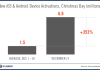 It was a very Android and iOS Christmas. Mobile apps research form Flurry released estimates on how many Android and iOS devices were activated on Christmas day, as well as how many apps were downloaded. On a combined basis, 6.8 million devices were activated, up 353 percent from the 1.5 million average activations a day over the first 20 days of December. And that number from 2.8 million combined activations on Christmas, 2010, the previous record. Flurry doesn’t break out the split between iOS and Android. But you can triangulate the numbers with other publicly available stats. Android chief Andy Rubin recently noted just before Christmas that Android activations surpassed 700,000 a day. So that leaves between 700,000 and 800,000 a day for iOS devices (iPhones iPads, and iPod Touches), roughly speaking. The big unanswered question is whether that 50/50 split continued on Christmas Day, or whether one OS or the other prevailed as the choice Christmas gadget gift. My guess is that Android was beating iOS in total daily activations up until Christmas, but the pull of Apple’s marketing might have evened things out on Christmas Day. In terms of apps, a record 242 million total apps were downloaded across both platforms, a 125 percent jump from the daily average earlier in December. Last Christmas, the number of combined downloads was 150 million. Flurry expects a billon apps to be downloaded between Christmas and New Year’s Day.
|
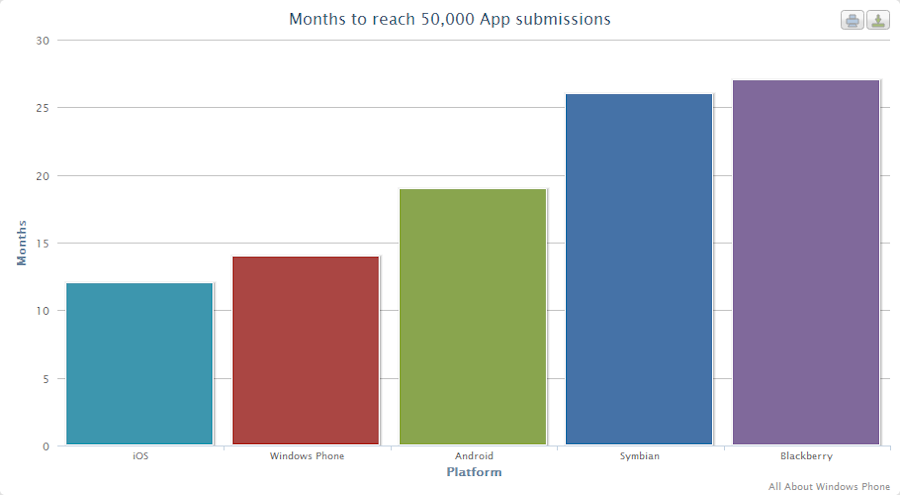
| Windows Phone Marketplace Hits 50,000 Published Apps Posted: 27 Dec 2011 09:52 AM PST  With Microsoft and Nokia making a pronounced push to expand Windows Phone’s reach, they need the support of their app developers to give the platform some staying power. Fortunately, it looks like Windows Phone is picking up steam on the app front — All About Windows Phone reports that 50,000 apps have been published in the Windows Phone Marketplace ahead of their initial predictions. There is, as always, a bit of catch — the number only refers to the number of apps that have been published, so you won’t find all 50,000 apps available for download in your neck of the woods. All About Windows Phone figures that nearly 6,000 apps were published in the marketplace and were subsequently pulled either by Microsoft or the developers themselves. Even so, Windows Phone has hit the 50,000 app mark in just 14 months — it took Android 19 months to hit that milestone, while iOS only took 12. Even if the exact number is a bit sketchy, there’s one thing that nearly all sources can agree on: the platform is growing. Back when the Windows Marketplace hit 40,000 apps, new submissions happened at a rate of about 165 per day, while today’s milestone sees daily submissions hovering around the 265 app mark. That Windows Phone is being embraced by more developers is heartening, but there’s still the question of quality to contend with. The Windows Marketplace is no stranger to spammy submissions that often buried better apps, although Microsoft has taken steps to make it less of an issue for developers on the up-and-up. Even so, the practice of mass uploading near identical apps continues: take rkg4u, for example. This developer has had 20 apps released into the Windows Marketplace yesterday, and all of them essentially aggregate content from different sections of CNN and the BBC’s websites. Are these apps useful? Arguably. Do they add anything new or novel to the Windows Phone experience? Absolutely not. And lest you think that I’ve cherry-picked that example, take a look at the marketplace’s new apps section — for every useful app you’ll find, there are likely to be 10 feed readers surrounding it. Now the issue of app quality isn’t one that’s unique to Windows Phone, but in a time when Microsoft is fighting for market and mind share, it certainly isn’t helping. While Microsoft tries to make it easy for Windows Phone users to sift through all the junk, the state of their app store could be a ticking time-bomb for them and their users. While potential customers may be swayed by the right hardware and the right OS at the right time, a bad balance between compelling and crappy apps could ensure that those who gamble on Windows Phone may not stick around for the long haul. What we need now are killer apps for Windows Phones, the ones that make Android and iOS users look on with unabashed envy. Consider this a rallying cry for all you Windows Phone devs out there — make something great, and let us all know about it.
|
| Posted: 27 Dec 2011 09:44 AM PST 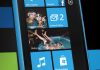 If you take a look at Techmeme right now, you’ll notice that the top conversation in the tech blogosphere is about Windows Phone, and more specifically why it has failed to catch on compared to Android smartphones in particular (according to Charlie Kindel, former GM of the product division). I’ve read people’s different views on this with great interest, but I feel like something’s missing: the opinion of an actual Windows Phone owner and user with no real skin in this game. Enter, well, me. A couple of weeks ago, I decided to stop using my HTC Sensation (Android 2.3) and iPhone 3GS (iOS 5) in parallel and made the switch to Nokia’s Lumia 800 (Windows Phone 7.5). As you can tell, I’m not exactly married to any company or product – it’s just not in my nature. I switched to Windows Phone mainly to see if it can hold its ground when used intensively. So far, it’s been a surprisingly pleasant ride, so I haven’t entirely dismissed WP7 as others appear to have done (even if most of them haven’t even used a decent Windows Phone yet). As most who’ve experienced the Windows Phone platform will attest, Microsoft offers something truly unique in terms of OS design and on-screen interaction, and I’m extremely glad to see the company not adopt a copy-paste innovation strategy as they’ve done more than a few times in the past. Say what you will, but Windows Phone offers a superb user experience, indeed far superior to most if not all the Android smartphones I’ve used in the past. You can call me a fan of the Metro UI. I already wrote up why I absolutely love the Nokia N9 (which sports nearly the same hardware as the Lumia 800 but with a different OS, namely Meego) but that no one will buy it mainly because the platform has no future, and there aren’t enough decent apps to even begin comparing the handset to an Android or iOS phone. I mean, I don’t see developers rushing to build Meego apps anytime soon. There are more WP7 apps, but that doesn’t mean the platform isn’t struggling on this front, too. While Windows Phone Marketplace appears to be steadily growing, most of the third-party WP7 applications I’ve tested genuinely suck. Of course, this is true for Android and iOS too (it’s a law of large numbers if you know what I mean) and at least the ‘essential’ applications – People, Messaging, Xbox Live, Mail and also Twitter, Facebook and YouTube – behave really well. The reason Windows Marketplace frustrates me is that even the ‘good’ applications that I use regularly (Rdio, Foursquare, Kindle, Pulse, and more) have weird quirks, or are downright unusable – I sense a lack of attention given to those apps by their own developers. Getting cash in exchange for making a Windows Phone app is one thing, but you should be proud of what you do – better not to build an app for the platform than to deliver a crappy one that will make you look amateurish. But all in all, a really amazing phone and platform with lots to offer, and I have no doubt that improvements will come quickly, and aplenty. That doesn’t necessarily mean customers will be lining up to buy Windows Phone handsets en masse, but there’s no reason they couldn’t grab more marketshare (and mindshare) in the future if Microsoft is willing to go the distance. Everything I’ve seen so far indicates that the company realizes that there’s not really an option – they have to matter in the mobile space. If Kindel is wondering why Windows Phones haven’t exactly been selling like hotcakes, I doubt you’ll find all the answers by looking at the business models and goals of the many industry players. Alignments can change. Kindel does nail the problems with Android and its absurd fragmentation issue, but I get the feeling he’s making excuses for Windows Phone far too soon in the game. Microsoft did enter this market extremely late, and, as I mentioned, there’s still a major app problem. Those are very big barriers to successful entry, but they can surely be overcome by a company the size of Microsoft, and as far as I’m concerned they still have a fighting chance. In fact, I’m hoping Microsoft manages to put enough time, money and effort into Windows Phone to turn it into a viable competitor to iOS and Android. At the end of the day, this will be decided by users and app developers foremost, not carriers, manufacturers and retail salespeople, but one can hope. What it will require is a lot more great phones, ‘big and bold’ marketing, UI consistency, far better apps and yes, more time. That’s no guarantee for success, but let’s give Windows Phone a chance. The reason I’m hoping Microsoft succeeds in ‘getting there’ is because I happen to think more choice will bring more progress and more technological advancement, rather than more fragmentation, feature-chasing and patent warfare. I’m not rooting for Microsoft, per se, but I don’t see anyone within striking distance of becoming this ‘third major player’ and we shouldn’t discount the talent of Microsoft’s vast army of engineers and developers, and the mountain of cash the company sits on, and notably continues to generate quarter after quarter after quarter. It’s still early days, and if the past few years have taught us anything it’s that industries can transform quite rapidly, and that it’s never a zero-sum game. No one knows what the future holds, but I can guarantee you the world will look be different – again – at the end of next year. Sent from my Windows Phone, gladly.
|
| Italy Fines Apple $1.2 Million Over AppleCare Sales Posted: 27 Dec 2011 08:59 AM PST  Today, Italy’s antitrust body has fined Apple, Inc. $1.2 million (900,000 euros) for pushing customers to buy its AppleCare Protection Plan without adequately disclosing the support that already comes with their device. In Italy, companies are actually required by law to provide two years of free support to customers, which, according to the Italian Antitrust Authority, was not clearly explained to Apple customers either online or at the point-of-sale. The report, available via a news blip on Reuters or as the full press release translated from Italian here, specifies that the fines are being leveraged against three of Apple’s local divisions: Apple Italia, Apple Sales International and Apple Retail Italia. 400,000 euros of the fine is for failing to inform customers of their right to two years’ free support provided by Italy’s Consumer Code law, instead only recognizing the one-year manufacturer warranty. This practice occurred on the websites at store.apple.com and apple.com and at the point-of-sale, says the group states. In other words, customers were sold the AppleCare service even though that protection would overlap with the guaranteed free support provided by law. The remainder of the penalty (500,000 euros) was for selling the AppleCare service itself, after failing to properly disclose the protections, as noted above. Italy says that Apple will need to update its website within 90 days with information about the existence of the two-year guarantee. This is not Apple’s only legal trouble in the EU. The company is also involved in patent litigation with Samsung and in a price-fixing case with e-book publishers.
|
| Airtight Is Airplay For Your Google TV Posted: 27 Dec 2011 07:59 AM PST 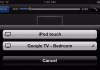 Proof of concept though this is, Airtight purports to be the first app that will enable Apple’s Airplay on the Google TV. Priced at a mere 99 cents, the app allows you to stream non-DRMed movies to your TV via any Airplay-enabled device like an iPad or iPhone. Music and mirroring are not yet supported and you have to have an update Google TV with the Android Market available. Because of these limitations I wouldn’t recommend that you pick up a GTV just to run Airplay and, because it isn’t Apple-sanctioned, expect plenty of breakage down the line. However, it’s nice to see some cool apps/hacks are percolating up through to the Google TV, thereby improving the platform for all.
|
| Spire: A New Legal Siri Port For Any iOS 5 Device Posted: 27 Dec 2011 07:07 AM PST  Well-known iOS hacker chpwn (aka Grant Paul) along with Ryan Petrich have released a new tool for installing Siri on jailbroken phones. The Siri port, called “Spire,” works on any phone that can run iOS 5. However, because Apple only officially supports Siri requests coming from the iPhone 4S, a proxy server address is still required. Oh, there’s one more thing: Spire is legal. While it’s technically been possible to run Siri on non-iPhone 4S devices, as previous Siri ports have shown, those ports have violated Apple’s copyrights. Siri’s resource files, images and code are not meant to be copied and widely distributed. So instead, Spire downloads Siri itself directly from Apple. Clever! Once the 100 MB download is installed on the jailbroken device, users will have to configure the software with a proxy server address. Explains Paul via the Spire Proxy FAQ, “Apple has made it very likely impossible to defeat the authorization requirement [for Siri]. I reverse engineered it, and it does not appear possible to connect Siri to the cloud without information from an iPhone 4S.” Remember, hackers don’t often throw around words like “impossible” too often. Clearly, Apple has some heavy-duty security in place for managing Siri requests. So how does one get a proxy address for Siri then? Paul suggests that you could ask an iPhone 4S-owning friend for their authentication tokens. But more interesting is his speculation that we will soon see for-pay Siri proxy services that charge a monthly fee for access to a copy of Siri installed on their own iPhone 4S devices. A third possibility – and one the hacker community would have to build – is to rip out Siri’s guts and replace it with Google Chrome's speech "API" to decode the Siri requests and return results. In other words, as of now, Spire is a good first step towards a legal implementation of a Siri port, but it’s going to be hard for people to actually use it until there are solutions for legal Siri proxies, too. Spire is available now in the jailbreak app store, Cydia.
|
| 5 Japanese Tech Companies (And Samsung) Set Up LTE Mobile Chip Venture Posted: 27 Dec 2011 06:46 AM PST  Big news from Asia’s mobile market today: Japan’s biggest mobile carrier NTT Docomo (55 million customers, over US$50 billion in sales per year) is teaming up with five other tech powerhouses to develop chips for next-generation mobile devices. Docomo’s partners are NEC, Fujitsu, Fujitsu Semiconductor Ltd., Panasonic, and Samsung. The goal is to use synergies in the six companies’ expertise in developing small and eco-efficient chips to supply to mobile device manufacturers in Japan, Korea, and other places. Docomo says the main focus will be on “products for LTE and LTE-Advanced mobile communication standards”. The carrier plans to set up a subsidiary ( “Communication Platform Planning Co.”) as early as next month, capitalize it at US$5.8 million, and turn that subsidiary into a fabless joint venture with the other partners in March next year. According to Japan’s biggest business newspaper The Nikkei, Docomo plans to become the biggest shareholder in the joint venture.
|
| You are subscribed to email updates from TechCrunch » Mobile To stop receiving these emails, you may unsubscribe now. | Email delivery powered by Google |
| Google Inc., 20 West Kinzie, Chicago IL USA 60610 | |